 Menu
Menu

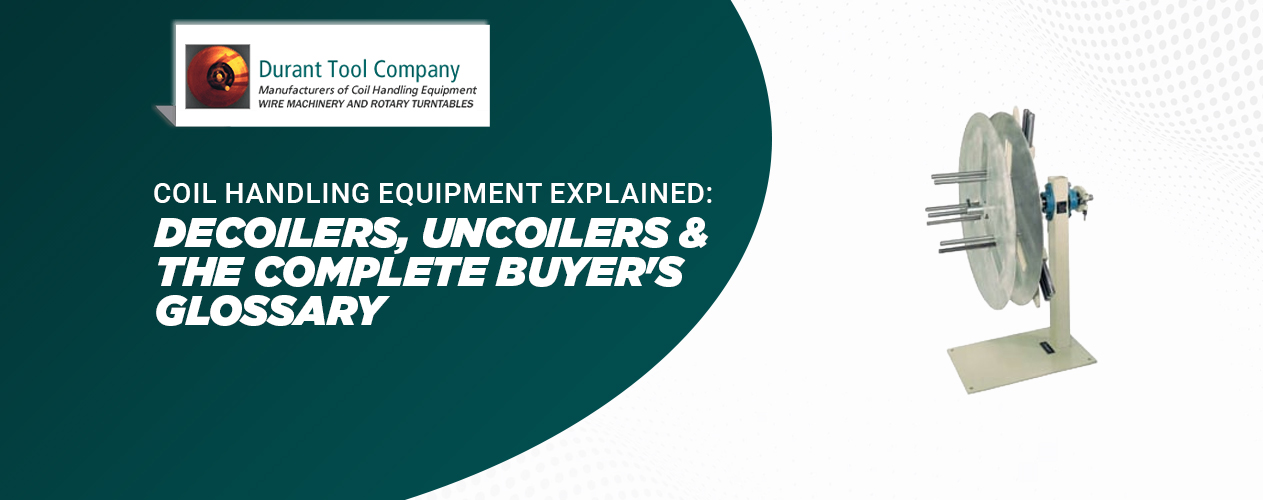
If you have ever watched a giant roll of steel get fed into a machine, you have seen coil handling equipment doing its quiet, heavy lifting. These machines take huge, tightly wound coils of metal and turn them into flat, usable strip that a press or a mill can actually shape. Without them, the smooth panel in your car door or your refrigerator would still be a stubborn, spring-loaded roll sitting on a warehouse floor.
Here is the part that trips people up. The words in this world get confusing fast. Decoiler, uncoiler, reel, straightener, recoiler. They sound like they mean different things, and sometimes they do, and sometimes they really do not. A shop foreman in Ohio and a salesperson in Texas might use two different names for the exact same machine, and both think they are right.
The good news is simple. Once you learn the basic parts and the common terms, the whole system clicks into place. A well-built coil handling equipment setup, like an adjustable core decoiler, is a great example of how one smart machine can quietly do the job of several. Learn the vocabulary, and buying, running, and fixing this gear stops feeling like a guessing game.
The metal in your everyday life almost always started its journey wound up tight and slightly angry.
Key Takeaways
Coil handling equipment is the group of machines that lift, unwind, straighten, feed, and re-wind coils of metal so a factory can shape them into finished parts. The main players are decoilers and uncoilers that unwind the coil, straighteners that flatten it, feeders that push it into a press, and recoilers that wind the finished strip back up. Good equipment keeps the production line moving, keeps workers safe, and stops pricey metal from getting scratched or bent. Regular, simple maintenance is what keeps all of it running smoothly for years.
| Question | Quick Answer |
| What is it? | Machines that lift, unwind, straighten, feed, and re-wind coils of metal |
| Core machines | Decoiler or uncoiler, straightener, feeder, recoiler |
| Why it matters | Keeps lines running, protects workers, prevents costly metal damage |
| Biggest risk | A coil that "springs" open if it is handled the wrong way |
| Key to long life | Small, regular, scheduled maintenance |
Durant Tool Company has spent decades designing coil-handling machines made to hold up to heavy, hour-after-hour use.
What Is Coil Handling Equipment, Really?
Coil handling equipment is any machine that helps you safely move, unwind, control, and process a coil of metal. A coil is just a long strip of metal wound into a tight roll, kind of like a giant roll of tape, only it can weigh several tons and it does not want to lie flat.
Metal ships in coils because it saves space and it is easy to transport. But a coil is useless to a factory until it gets unwound and flattened. The machines that do that job, from the reel that holds the coil to the feeder that pushes it forward, all fall under the umbrella of coil handling.
This gear shows up anywhere metal gets shaped:
- Auto plants stamping body panels and brackets
- Appliance makers building washers, dryers, and stoves
- Roofing and siding companies rolling out metal panels
- HVAC shops forming ducts
- Sign, shelving, and furniture manufacturers
Because these machines run all day, maintenance is not a "nice to have." It is the difference between a line that hums and a line that breaks down in the middle of a big order. A neglected reel or a dry bearing can jam a coil, dent expensive stock, or worse, let a heavy coil move when it should not. Simple upkeep keeps the whole system safe and steady, and we will get into the how-to later on.
People often use "coil handling" and "coil processing" as if they mean the same thing. Handling usually means moving and controlling the coil. Processing means changing it, like straightening or cutting. Most real production lines do both, back to back.
Why Coil Handling Equipment Matters on the Floor
A coil of steel is heavy, awkward, and full of stored energy. Picture a tightly wound spring the size of a car tire. If it gets loose without control, it can whip open in a flash. That is why the right coil material handling equipment is a safety tool first and a productivity tool second.
The world turns out roughly 1.8 billion tonnes of steel every single year, and a huge share of that metal moves through coil lines on its way to becoming a finished product. Every one of those coils has to be lifted, held, and unwound by something. Multiply that across thousands of factories, and you can see why doing this safely and cleanly is a very big deal.
Good coil-handling equipment pays off in three clear ways:
- Safety. Controlled unwinding keeps coils from springing loose and keeps hands away from pinch points.
- Speed. A smooth feed means fewer jams, less downtime, and more finished parts per shift.
- Quality. Gentle handling means no scratches, dents, or coil-set marks that ruin the final part.
Bad handling costs money in ways that are easy to miss. A scratched coil might get rejected. A jammed line might sit idle while a crew clears it. A dropped coil can hurt someone and shut a plant down for a day. Smart equipment quietly prevents all of that.
A single ruined coil is not just wasted metal. It is wasted labor, wasted machine time, and a missed deadline. The right handling gear protects all four at once.
The Main Types of Coil Handling Equipment
Most coil lines are built from a handful of core machines. Learn these five families, and you will understand about ninety percent of any line you walk up to. Durant Tool Company builds several of these, and if you want a deeper walk-through of the full range, this rundown of the gear that runs from decoilers to recoilers is a handy companion to what follows.
Decoilers and Uncoilers
A decoiler is the machine that holds the coil and unwinds it in a controlled way. It is the starting point of almost every coil line. Some people call it an uncoiler, and for most everyday shop talk, the two words mean the same thing.
There are two basic styles:
- Powered (motorized): A motor turns the mandrel to feed the strip. Great for heavy coils and fast lines.
- Pull-through (non-powered): The press or feeder pulls the strip and the reel spins freely. Simpler and cheaper, best for lighter coils.
Some models also handle different coil sizes without a full changeover, which is a huge time saver. If you run a mix of jobs, a flexible reel earns its keep. Durant's line of variable-speed, motorized uncoilers and decoilers is a good example of that flexible, powered style.
Straighteners and Levelers
Metal has memory. A coil "remembers" its round shape, so when it unwinds, it wants to stay curved. A straightener runs the strip through a set of rollers that bend it back and forth until it lies flat.
A leveler does the same basic job but with more rollers and finer control, for tougher flatness needs. For thinner flat stock, a dedicated set of flat stock straighteners keeps the strip clean and even before it reaches the press.
Feeders
A feeder pushes a precise length of strip into a press, then stops, then pushes again. It is the timing device of the line. Feeders come in a few flavors:
- Servo feeders for high precision and speed
- Air feeders for lighter, simpler jobs
- Roll feeders built right onto the press
Recoilers
A recoiler does the opposite of a decoiler. It winds the finished or processed strip back into a neat coil. You see recoilers on slitting lines, coating lines, and anywhere the strip needs to ship back out as a roll.
Coil Cars, Reels, and Cradles
These are the muscle that moves and holds coils before they even reach the reel:
- Coil cars carry heavy coils from storage to the line and lift them onto the mandrel
- Cradles hold wide, heavy coils in a curved bed and roll them open
- Turnstiles hold two coils so one can load while the other runs
Match the machine to your heaviest and widest coil, not your average one. A reel that only fits your typical coil will leave you stuck the day a big job walks in the door.
Not sure which reel fits your coils? Durant Tool Company's team can size a decoiler, straightener, or feeder to your exact coil weight, width, and speed so the whole line works as one.
The Complete Coil Handling Equipment Glossary Every Buyer Should Know
This is the part most buyers wish they had on day one. Below is a plain-English glossary of the terms you will hear from salespeople, engineers, and old-timers on the floor. Keep it handy, and you will never nod along pretending to understand a quote again.
Here is a quick side note before the list. Good steel coil handling equipment lives or dies on a few numbers: coil weight, coil width, inside diameter, and outside diameter. Almost every term below connects back to one of those four.
- Mandrel: The center shaft or drum that the coil sits on. It expands to grip the coil's inside diameter. Think of it as the axle the roll spins around.
- Inside Diameter (ID): The size of the hole in the center of the coil. The mandrel has to match this so the coil sits snug and centered.
- Outside Diameter (OD): The full width of the coil from edge to edge. This tells you how big a coil the reel can physically hold.
- Coil Weight Capacity: The heaviest coil a machine can safely carry. Go over it, and you are asking for trouble.
- Coil Width: How wide the metal strip is. Your reel, straightener, and feeder all need to handle your widest strip.
- Coil Set: The natural curve a coil keeps from being wound. The straightener's whole job is to remove it.
- Cross Bow and Edge Wave: Two common shape defects. Cross bow is a side-to-side curve. Edge wave is wavy, stretched edges. Levelers fight both.
- Expanding Mandrel: A mandrel that grows to grip the coil ID from the inside, then shrinks to release it. Fast and secure.
- Backstop or Hold-Down Arm: A padded arm that presses on the coil to stop it from unwinding too fast and springing open.
- Peeler or Debander: The tool or arm that lifts the loose end of the strip so you can thread it into the line.
- Threading: The act of feeding the strip's leading edge through the straightener and into the feeder or press.
- Payoff: Another word for the unwinding stage. A "payoff reel" is the same idea as a decoiler.
- Slitting: Cutting a wide coil into several narrower strips. A slitting line does this, then recoils each strip.
- Loop or Loop Pit: A dip of slack strip between machines. It acts as a buffer so a fast press and a steady reel do not fight each other.
- Pinch Rolls: Two rollers that grip the strip and pull it forward, often to start threading.
The single most dangerous moment on a coil line is when the banding straps get cut. A coil under tension can snap open with real force. Always use a hold-down arm and stand clear of the "spring zone" while cutting bands.
That glossary covers the terms buyers meet most. If you want to go deeper on one flexible workhorse machine, this breakdown of a double spindle decoiler shows how a two-spindle setup keeps a line running while you load the next coil.
The mandrel design that lets a reel grip many different coil sizes is often called an "adjustable core," and it is one of the reasons a single machine can run a Monday job and a Friday job that look nothing alike.
How to Choose the Right Coil Handling Equipment
Buying this gear is a lot like buying work boots. The flashy option is fun, but the right fit is what saves your feet, or in this case, your budget. Good coil material handling equipment should fit your metal, not force your metal to fit it. Start with your coils, not with the machine.
Ask these questions in order:
- What is my heaviest coil? This sets your weight capacity. Round up, never down.
- What is my widest strip? Your reel, straightener, and feeder all need to clear it.
- What are my coil ID and OD? These decide your mandrel size and reel diameter.
- How fast does my line need to run? Faster lines usually want powered, servo-driven gear.
- Do I run one job or many? A mix of jobs points you toward an adjustable, flexible setup.
- What is my metal type and thickness? Thick, hard steel needs more straightening muscle than thin aluminum.
- How much floor space do I have? Some lines run in a straight shot. Others need to fit around a corner.
On the money side, keep expectations realistic instead of exact. Prices swing a lot based on capacity, automation, and options, so treat any quote as a starting point and compare a few. A basic pull-through reel sits at the low end. A fully automated line with a coil car, powered reel, leveler, and servo feeder sits far higher. The cheapest machine that meets your real needs almost always beats the fanciest one that does not.
Here is a simple way to weigh the two most common decoiler styles:
| Factor | Powered Decoiler | Pull-Through Decoiler |
| Best for | Heavy coils, fast lines | Lighter coils, simpler jobs |
| Cost | Higher | Lower |
| Control | Precise, motor-driven | Depends on press or feeder |
| Setup | More complex | Simpler |
The reel is only as useful as the coils it can grip. If your supplier ever changes your coil ID or bumps up coil weight, check that your existing gear can still handle it before the first roll shows up.
How to Maintain Coil Handling Equipment (Step by Step)
Here is the honest truth. Most coil line breakdowns are not dramatic failures. They are small, ignored problems that grew up. A dry bearing, a loose bolt, a worn roller. Reliable steel coil handling equipment earns its keep on the shifts it runs without a single jam, and that reliability comes straight from upkeep. Good maintenance is boring, cheap, and it is the best money you will ever spend. Follow these steps and your gear will thank you.
Step 1: Do a daily walk-around. Before the first coil of the day, take two minutes to look and listen. Check for oil leaks, loose guards, and anything on the floor that should not be there. A quick look now beats a long repair later.
Step 2: Keep it clean. Metal shops make dust, chips, and grime. Wipe down rollers and clear debris from the mandrel and tracks. Dirt on a straightening roller ends up as a mark on your finished part.
Step 3: Lubricate on a schedule. Bearings, chains, and moving joints need grease. Follow the maker's chart for how often and how much. Under-greasing wears parts out. Over-greasing attracts grit. Both are avoidable.
Step 4: Check the rollers and mandrel. Look for worn, flat, or grooved rollers, and make sure the mandrel still expands and grips evenly. Uneven grip leads to a coil that wobbles or slips.
Step 5: Inspect safety parts every time. Test the hold-down arm, the brake, and any emergency stops. These are the parts that keep a coil from springing loose. They are the last ones you ever want to fail.
Step 6: Tighten and align. Vibration loosens bolts over time. Check key fasteners and confirm the strip still tracks straight through the line. A drifting strip is an early warning sign.
Step 7: Keep a simple log. Write down what you checked and when. A one-page log turns "I think we greased it last month" into a clear record, and it makes warranty and repair calls far easier.
Assign the daily walk-around to the same operator each shift. When one person knows the machine's normal sounds and feel, they catch the odd rattle days before it becomes a shutdown.
Ready to keep your line running without the surprise breakdowns? Reach out to Durant Tool Company's support team or browse the product pages to find the reel, straightener, or feeder that fits your shop.
Conclusion
Coil handling equipment is the quiet backbone of nearly every metal-shaping factory in the country. Once you know the parts, the decoiler that unwinds, the straightener that flattens, the feeder that times the push, and the recoiler that winds it back up, the whole line stops looking like a mystery and starts looking like a team of machines each doing one clear job. Learn the glossary, match the gear to your real coils, and stay on top of simple maintenance, and you will run a safer, faster, and cleaner line.
The best part is that none of this has to be complicated. A little vocabulary and a little upkeep go a very long way.
When you are ready to build or upgrade a line that holds up shift after shift, Durant Tool Company has the machines and the know-how to make it happen, and the folks at Durant Tool Company are always happy to help you get the fit exactly right.
FAQs
How much does coil handling equipment usually cost?
Prices vary widely based on coil weight, width, speed, and how much automation you add, so a simple pull-through reel costs far less than a fully powered line. It is best to get a quote built around your exact coils rather than relying on a ballpark figure.
How big and heavy can the coils be?
That depends entirely on the machine's rated capacity, and coils can range from a few hundred pounds up to several tons. Always choose gear rated for your heaviest and widest coil, not your everyday average.
Can one decoiler handle different coil widths?
Yes, many decoilers use an adjustable core or expanding mandrel that grips a range of coil sizes without a full changeover. This flexibility is a big plus for shops that run a mix of jobs.
Is a powered decoiler better than a pull-through one?
A powered decoiler gives you more control and suits heavy coils and fast lines, while a pull-through model is simpler and cheaper for lighter work. The right pick comes down to your coil weight and line speed, not the price tag alone.
What is the difference between a straightener and a leveler?
A straightener uses fewer rollers to remove the basic curve, or coil set, from the strip, while a leveler uses more rollers and finer control to fix tougher flatness defects. Many demanding lines use a leveler when part quality has to be near perfect.


