 Menu
Menu

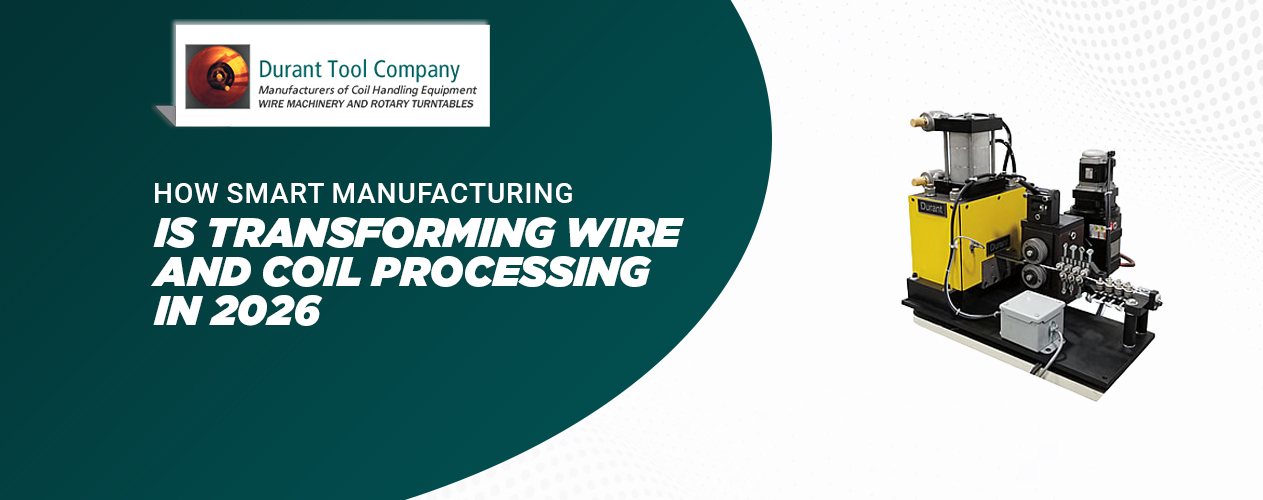
Wire and coil work used to be loud, messy, and full of guesswork. A worker loaded a heavy coil, threaded the material by hand, and hoped the line ran smooth for the rest of the shift. One jam could stop everything cold. Today, the picture on the shop floor looks very different.
Smart manufacturing has quietly moved into wire and coil work, and it is changing how metal coils and wire get handled from the first turn to the last. Machines now sense tension, catch problems early, and feed material with a level of control that hand-run lines could never match. Equipment makers like Durant Tool Company have watched this shift up close, building gear that talks to the rest of the line instead of working alone.
The result is a process that runs faster, wastes less, and keeps people safer. And the strangest part? Most of the smartest upgrades are hiding inside machines that look almost the same as they did ten years ago.
Key Takeaways
Smart manufacturing is transforming wire and coil processing by connecting machines, sensors, and software so the whole line can sense problems, adjust on its own, and run with far less waste. Instead of workers guessing at tension or reacting to jams, connected equipment now tracks each coil in real time and keeps the material moving at the right speed and pressure. This means faster runs, fewer stops, better part quality, and safer work for the people on the floor.
| Idea | What It Means for Wire and Coil Work |
| Connected machines | Decoilers, feeders, and recoilers share data instead of running blind |
| Live sensing | Sensors watch tension, speed, and coil size as the line runs |
| Predictive maintenance | Small problems get flagged before they cause a shutdown |
| Less waste | Better control means fewer scrap parts and less wasted metal |
| Safer floors | Automation handles heavy coils and lowers injury risk |
| Better data | Every run creates numbers that help improve the next one |
Durant Tool Company has spent years building coil and wire handling equipment for American shops that want their lines running with more control and less guesswork.
What Smart Manufacturing Means
The term gets used a lot, so it helps to pin down what it means. Smart manufacturing is a way of running a factory where machines, sensors, and software are all connected and share information. Instead of each machine doing its own job in silence, they work as one system that can sense what is happening and respond right away.
The U.S. National Institute of Standards and Technology describes it as fully integrated, collaborative systems that respond in real time to changing needs on the factory floor and across the supply chain. You can read more on the agency's smart manufacturing research page. In plain terms, the machines talk to each other, and the line makes smarter choices with less human help.
At its heart, smart manufacturing technology rests on a few simple ideas:
- Sensors collect data from every machine and every step.
- That data flows into software that can read it fast.
- The software spots patterns, flags issues, and suggests changes.
- Some systems act on their own, adjusting speed or tension without waiting.
This is the same thinking behind Industry 4.0, the name often given to this wave of connected factories. It moves a plant away from reacting to problems and toward preventing them. For wire and coil shops, that change matters a lot, because so much can go wrong in the seconds it takes material to move through a line.
A connected line does not replace skilled workers. It gives them better tools and clearer information so they can catch problems sooner and make smarter calls.
A Quick Look at Wire and Coil Processing
Before we get into the smart part, it helps to know what wire and coil processing involves. At its core, the job is about taking metal that arrives in big rolls and turning it into something useful. That metal might be steel, copper, aluminum, or wire of many gauges.
A typical line moves through a few main stages:
- Uncoiling: A decoiler or uncoiler holds the big coil and lets it feed out in a controlled way.
- Straightening: Rollers flatten the natural curve out of the material so it runs true.
- Feeding: A feeder pushes the material forward at an exact length and speed.
- Forming or cutting: The material gets stamped, bent, cut, or shaped into a part.
- Recoiling or spooling: Finished material gets wound back onto a spool or coil for storage and shipping.
Each stage leans on the one before it. If the coil feeds out unevenly, the straightener struggles. If the feeder slips, the cut length goes wrong. That chain reaction is exactly why connected, sensing equipment makes such a big difference here. One weak link can throw off everything downstream.
The machines that handle these steps range from simple manual units to fully automated manufacturing systems that run with almost no hands-on work. Shops often mix and match based on their volume, their budget, and the kind of material they run. A small custom shop might use a manual decoiler and a servo feeder, while a high-volume plant might automate the entire path from coil to finished part.
Why Wire and Coil Lines Needed an Upgrade
Older lines got the job done, but they came with real headaches. Most of the control lived in the hands and eyes of the operator. A skilled worker could feel when tension was off or hear when a bearing started to fail. That knowledge was valuable, but it was hard to share and easy to lose when someone retired or called in sick.
Here are the common problems that slowed down traditional lines:
- Manual coil handling: Loading heavy coils by hand was slow and risky.
- Guesswork on tension: Too tight and the material stretched. Too loose and it tangled.
- Surprise breakdowns: A worn part often failed with no warning, stopping the whole line.
- Wasted material: Bad feeds and setup errors turned good metal into scrap.
- Hard-to-track quality: Without data, it was tough to know why a batch went wrong.
Every one of these issues costs money. A single unplanned stop can idle a whole crew for hours. Multiply that across a year and the losses add up fast.
Poor maintenance and unplanned downtime are widely believed to cost manufacturers billions of dollars each year across the country.
Connected equipment tackles these weak spots head-on. It takes the quiet knowledge that used to live only in an operator's head and turns it into data the whole plant can see and act on. That is the real reason so many shops are making the switch.
8 Ways Smart Manufacturing Is Changing Wire and Coil Processing
Now for the heart of it. Connected smart manufacturing systems touch every stage of a wire and coil line. Here are eight of the biggest ways they are changing the work in 2026.
1. Smarter Decoiling and Coil Handling
The line starts with the coil, so smart upgrades often start here too. Modern decoilers can sense the weight and size of a coil and adjust their speed to match. Powered units load and unload heavy coils with far less human lifting. Some connect directly to the feeder downstream, so the whole entry point moves as one unit.
Good coil handling equipment keeps tension steady from the very first turn of the coil. That steady start ripples through every stage that follows. When the coil pays out cleanly, the straightener and feeder have an easier job, and the whole line runs smoother.
2. Servo-Driven Roll Feeders
A feeder controls how much material moves and how fast. Older feeders relied on mechanical timing that was hard to fine-tune. Servo-driven roll feeders changed that. They use precise motors and digital controls to feed exact lengths again and again.
The payoff shows up in accuracy. When a feeder can hit the same length within a hair every time, scrap drops and part quality climbs. Operators can also change settings on a screen instead of swapping out mechanical parts, which saves setup time between jobs.
3. Predictive Maintenance That Warns You Early
This might be the biggest shift of all. Instead of waiting for a machine to break, sensors watch for early warning signs. They track things like heat, vibration, and motor strain. When a reading drifts out of its normal range, the system flags it.
That warning gives the shop time to fix the part on their own schedule, not in the middle of a rush order. Predictive maintenance turns surprise breakdowns into planned, quick repairs. It is one of the clearest examples of a line that thinks ahead instead of reacting.
Predictive maintenance is widely seen as one of the fastest ways for a plant to earn back its investment in connected equipment.
4. IoT Sensors and Live Monitoring
IoT stands for the Internet of Things, which is a simple way of saying machines connected to a network. On a wire and coil line, these sensors sit on nearly every part. They measure tension, speed, coil diameter, temperature, and more.
All of that data streams to a screen in real time. A supervisor can see the whole line at a glance, even from a phone or a laptop across the building. Problems that once hid inside a machine are now easy to see. If tension starts creeping up on one section, the screen shows it before it turns into a jam.
5. Digital Twins of the Line
A digital twin is a live computer copy of a real machine or line. It uses the same sensor data to mirror what the real equipment is doing at that moment. Engineers can test changes on the twin before touching the real line.
Want to try a faster feed speed? Run it on the twin first. This lowers risk and helps teams fine-tune a line without wasting real metal or real hours. It also makes training safer, since new operators can practice on the copy before running the real thing.
6. Machine Vision for Quality Control
Cameras paired with smart software can inspect material far faster than the human eye. Machine vision checks for surface flaws, wrong widths, or bad edges as the material flies by. If it spots a defect, it can flag the section or stop the line.
This catches problems early, before a whole batch gets ruined. It also frees up skilled workers to focus on harder tasks instead of staring at moving metal all day. Over time, the vision system builds a record of what went wrong and when, which helps the shop fix the root cause.
7. Automated Tension and Straightening Control
Tension is the quiet hero of coil processing. Too much and the material stretches or snaps. Too little and it tangles or feeds unevenly. Automated systems now hold tension steady on their own, adjusting many times per second.
Straighteners have gotten smarter too. They can sense the natural curve of a coil and set their rollers to match. The result is material that runs flat and true with far less trial and error. Operators spend less time dialing in settings by hand and more time keeping jobs moving.
8. Connected Wire Spooling and Recoiling
At the end of the line, finished wire or metal gets wound back up. Smart spoolers and recoilers keep the winding even and tight, which protects the material and makes storage easier. They match their speed to the rest of the line so nothing bunches or slips.
For shops weighing their options, choosing a wire spooler that fits the line matters as much as any other machine. A mismatched spooler can undo the gains made everywhere else. The last stage deserves the same care as the first.
Durant Tool Company builds servo roll feeders, decoilers, and coil handling systems designed to plug into modern lines and hold precise control from the first coil to the last.
The Payoff: What Shops Gain from Smarter Lines
All these upgrades add up to real, everyday wins. The gains go well beyond fancy tech. They show up in the numbers that matter most to a shop owner, from output to safety.
Here is where connected wire and coil lines tend to shine:
- Higher output: Lines run longer with fewer stops.
- Less scrap: Precise feeds and live checks mean fewer wasted parts.
- Lower costs: Planned repairs beat emergency ones every time.
- Better quality: Consistent tension and vision checks raise the bar.
- Safer work: Machines handle the heavy, risky lifting.
- Smarter choices: Real data helps managers plan the next move.
A quick side-by-side makes the shift easy to see:
| Area | Old Way | Smarter Way |
| Coil loading | Heavy manual lifting | Powered, sensor-guided handling |
| Feeding | Mechanical guesswork | Servo control to exact lengths |
| Maintenance | Fix it after it breaks | Fix it before it breaks |
| Quality checks | Human spot checks | Live machine vision |
| Data | Notes on paper | Real-time dashboards |
None of this happens by accident. It takes equipment built to share data and work as a team. Suppliers like Durant Tool Company have leaned into this shift, building machines that fit right into connected lines instead of standing apart from them.
Challenges Manufacturers Still Face
Smart lines bring big benefits, but the road there has bumps. It helps to know them going in so there are no surprises.
- Upfront cost: Connected equipment often costs more than basic machines. Small shops feel this most.
- Setup and training: Staff need time to learn new systems and screens.
- Old and new mixing: Fitting smart gear onto an older line can take careful planning.
- Cybersecurity: Connected machines can be a target, so networks need protection.
- Data overload: Sensors create a flood of numbers, and someone has to make sense of it.
The good news is that these hurdles keep getting smaller. Prices are easing, tools are getting simpler, and many suppliers help with setup. Starting with one upgrade, like a servo feeder or a smart decoiler, is a common way to ease in without redoing the whole floor at once.
You do not have to automate everything on day one. Many shops upgrade one machine, learn from it, and add more as the gains prove themselves.
Who Is Using Smarter Wire and Coil Lines
This shift is not limited to giant plants. Shops of many sizes now use connected coil and wire equipment. Common users include:
- Automotive parts makers who need tight, repeatable quality.
- Electronics and cable makers working with fine wire.
- Construction and rebar suppliers handling heavy coils.
- Appliance and HVAC makers running high volumes.
- Custom metal shops that switch jobs often.
The reason is simple. Any shop that runs coil or wire through a line can gain from steadier control and less downtime. The size of the gain depends on volume and material, but the basic wins apply almost everywhere. A small shop may add one smart machine, while a large plant may connect its entire floor.
What Wire and Coil Processing Looks Like Through 2026
The pace of change is picking up. Heading through 2026, a few trends stand out for wire and coil shops.
First, one-button operation is spreading. Tasks that once took several manual steps, like loading, threading, and feeding, are folding into single automated moves. Second, AI is creeping into the software, helping systems make smarter calls about speed and tension on their own. Third, energy use is getting more attention, with smarter lines trimming both waste and power draw.
The global market for connected factory tech tells the story. Smart manufacturing is valued in the hundreds of billions of dollars and is growing at a strong double-digit yearly rate, as industries around the world upgrade their plants. Wire and coil processing is riding that same wave, with older manual lines slowly giving way to connected ones.
The trend is clear: the machines are getting quieter, smarter, and far more connected than the loud, manual lines of the past.
Ready to bring more control to your wire and coil line? Reach out to Durant Tool Company to match the right coil handling and feeding equipment to your shop.
Conclusion
Wire and coil work has come a long way from the days of heavy lifting and educated guesses. Smart manufacturing has turned these lines into connected, sensing systems that catch problems early, feed material with precision, and keep people safer. The machines may look familiar on the outside, but the brains inside them have changed the game.
For any shop that runs metal through a line, the message is clear. Steadier control, less waste, and fewer surprise stops are within reach, and the tools to get there are more accessible than they have ever been. The shops that move now will spend less time fighting jams and more time filling orders.
The smartest lines of 2026 start with the right equipment. See how Durant Tool Company can help your wire and coil process run leaner, safer, and smarter.
FAQs
What is the difference between a decoiler and an uncoiler?
The two terms are often used for the same machine that unwinds a coil at the start of a line. Some shops use decoiler for powered units and uncoiler for simpler ones, but the basic job is the same.
Do small shops benefit from smart wire and coil equipment?
Yes. Even a single upgrade, like a servo feeder or a sensor-equipped decoiler, can cut waste and downtime, and many smaller shops start there before adding more connected machines.
How much does it cost to upgrade a coil processing line?
Costs vary widely based on the machines and the level of automation, so most shops get a quote for their specific setup. Many start with one machine and expand over time to spread out the investment.
Is smart manufacturing the same as full automation?
Not quite. Full automation means machines do the work with little human help, while smart manufacturing focuses on connecting machines and using data, which may or may not include full automation.
What kind of maintenance do connected coil machines need?
They still need regular mechanical care like any machine, but their sensors help by flagging worn parts early. This shifts much of the work from emergency fixes to planned, routine service.


