 Menu
Menu

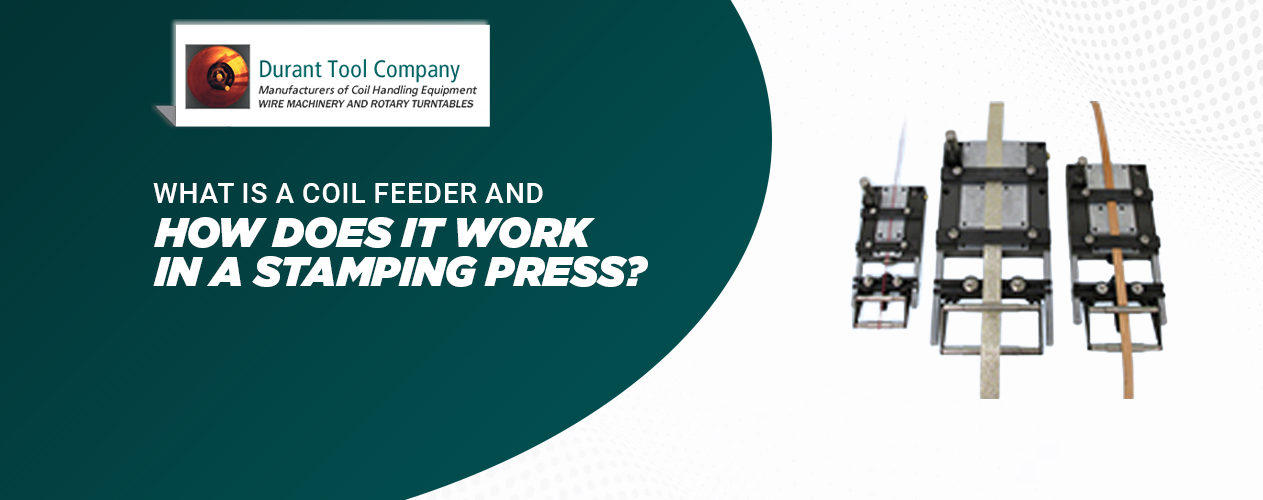
Visualize a metal stamping press running at full speed. Finished parts fly out one after another, all the same shape and all the same size. None of that happens by luck. Behind the scenes, a small workhorse is quietly pushing a long strip of metal into the machine at the exact right moment, in the exact right amount.
That workhorse has a name. A coil feeder for press operations takes a giant roll of flat metal and turns it into a steady, measured supply for the press. Feed the metal correctly and your press hums along for hours. Feed it wrong and you get jams, wasted material, and one very grumpy operator. This is why smart shops treat feeder care as a daily habit, not an afterthought.
There are a few kinds worth knowing, from servo-driven units to a fast little rapid air feeder that runs on shop air. Each one has a job. Each one has its own quirks. And each one can quietly make or break your production numbers.
Feed the metal wrong, and even a very expensive press turns into a very expensive paperweight.
Key Takeaways
A coil feeder is the machine that pushes flat metal from a large roll into a stamping press in exact, repeatable lengths. It works in time with the press, so a fresh section of metal is ready for every stroke of the ram. The main types are servo roll feeders, air feeders, and rapid air feeders. Simple habits like daily cleaning, checking the rollers, and watching air pressure keep it accurate and jam-free.
| Question | Quick Answer |
|---|---|
| What does it do? | Feeds a measured metal strip into the press for each stroke |
| How does it work? | Grips the strip and advances a set length between press strokes |
| Main types | Servo roll feeder, air feeder, rapid air feeder |
| Why does maintenance matter? | It prevents misfeeds, scrap, and costly downtime |
| Best care habit | Daily cleaning and a quick roller check |
60+ Years of Coil Handling Expertise
Durant Tool Company builds coil handling and feeding gear for shops that can't afford a bad feed day.
Learn About DurantWhat Is a Coil Feeder for Press?
A coil feeder is a machine that pulls flat metal off a big roll and pushes it into a press in set lengths. Think of it like a careful helper that hands the press exactly one strip of metal at a time, over and over, without ever getting tired.
The metal starts life as a coil. A coil is just a long sheet of metal wound up tight, kind of like a giant roll of tape. That roll can weigh a few hundred pounds or many thousands of pounds. You cannot shove a heavy roll into a press by hand and hope for the best. You need something to unwind it, flatten it, and feed it in with real precision. The feeder handles that last and most important step.
Here is the part many people skip. A feeder is a precision tool, and precision tools drift out of tune when nobody cares for them. A worn roller or a low air line will not stop the machine right away. It will just start feeding a little off. A little off becomes a lot of scrap by the end of the shift. That is why maintenance belongs in the very first conversation about feeders, not the last.
Metal stamping is a huge part of modern manufacturing, and according to Grand View Research it keeps growing year after year, worth well into the hundreds of billions of dollars worldwide. Every one of those stamped parts started as a coil that a feeder had to move.
The feeder does not cut or shape the metal. It only positions it. The press does the actual stamping, cutting, or forming once the strip is sitting in the right spot.
The Coil Line: Where the Feeder Fits
A feeder rarely works alone. It is one link in a chain of machines called a coil line or a coil feeding line. Each machine does one job and hands the metal to the next.
Here is the typical order of a coil line:
- Decoiler (or uncoiler): Holds the heavy coil and unwinds it in a smooth, controlled way.
- Straightener: Flattens out the natural curve of the metal so it enters the press dead flat.
- Loop control: Manages the slack of metal between machines so nothing gets yanked too hard.
- Feeder: Grips the flat strip and advances the exact length needed for each press stroke.
- Press: Stamps, cuts, or forms the part.
- Scrap cutter or recoiler: Deals with the leftover skeleton of metal after parts are punched out.
The feeder sits near the end of that chain, but it depends on everything before it. If the decoiler unwinds unevenly or the straightener leaves a curl in the strip, the feeder has to fight the metal instead of guiding it. The upstream gear, moving from decoilers to recoilers, sets the feeder up to either shine or struggle.
A great feeder cannot fix a bad coil line. If the strip arrives crooked or wavy, your feed accuracy suffers no matter how good the feeder is. The whole line has to work as a team.
How a Coil Feeder for Press Works, Step by Step
The idea behind a feeder is simple. Grab the metal, move it a set distance, let go, then wait for the press to stamp. Repeat forever. The magic is in the timing. Here is how a coil feeder for press work moves metal, one step at a time.
- The coil loads onto the decoiler: A forklift or hoist places the heavy roll onto the decoiler spindle. The decoiler holds it steady and gets ready to unwind.
- The strip threads through the straightener: The leading edge of the metal is fed through a set of rollers that press the curl out of it. Flat metal in, flat metal out.
- The flat strip enters the feeder: The straightened metal reaches the feeder, where it slides between two rollers or a set of clamps.
- The feeder grips the strip: The rollers close or the clamp bites down. Now the metal is held tight so it cannot slip or wander.
- The feeder advances a set length: The feeder pushes the strip forward by an exact amount, called the feed length. This is the distance between one part and the next.
- The feeder releases and holds position: Right before the press ram comes down, the feeder eases its grip just enough so the die can pull the metal into perfect final position. The strip stays put while the press does its work.
- The press stamps the part: The ram drops, the die shapes or cuts the metal, and the ram lifts back up.
- The cycle repeats: The feeder grips again, advances the next length, and the whole dance starts over, often many times per minute.
A loop control usually sits between the straightener and the feeder to keep a gentle sag of metal ready. That loop acts like a shock absorber. It means the feeder can grab metal quickly without jerking the heavy coil around.
The real trick is matching the feeder's timing to the press. On many setups, the press ram itself trips the feeder through a striker, so the two are always in step. On servo systems, an electronic controller times everything down to fractions of a second.
Tip: Set your feed length once and then run a few test strokes before a full production run. A quick check now saves a bin of scrap later. Measure the first few parts with calipers and confirm the pitch is right on target.
Types of Press Feeders
Not every job needs the same kind of feeder. A tiny electrical contact and a thick automotive bracket ask for very different tools. Most shops choose from a handful of common press feeder styles, and each one trades off speed, accuracy, and cost in its own way.
Servo Roll Feeder
A servo roll feeder uses two motor-driven rollers to grip the strip and push it forward. A smart controller runs the motor, so you can dial in the feed length on a screen and change it in seconds. This style is prized for tight, repeatable accuracy and for handling a wide range of material widths and thicknesses.
Servo units are the go-to for high-precision work and for jobs that change often, since you can reprogram the feed length without swapping hardware. For repeatable accuracy, many shops choose a servo coil feeder for press lines that grips the strip with driven rollers and never loses its place.
Air Feeder
An air feeder runs on compressed shop air instead of a servo motor. Inside, a clamp grips the metal and an air cylinder slides it forward by a set amount, then a second clamp holds while the first resets. Air feeders are simple, affordable, and tough. They are a favorite for small to medium parts and for shops that already have plenty of shop air on hand. You can explore a full range of pneumatic air feeder models sized for different widths and stroke lengths.
Rapid Air Feeder
A rapid air feeder is an air feeder built for speed. It uses the same clamp-and-slide idea but is tuned to cycle very fast, which suits short feed lengths at high strokes per minute. When your part is small and your press runs quick, a rapid air feeder can keep pace without the price tag of a full servo system.
Pull-Through and Feeder-Straightener Combos
Some machines combine two jobs in one frame. A feeder-straightener both flattens and feeds the metal, which saves floor space and setup time. These are handy when space is tight or when you want fewer machines to maintain.
Here is a simple way to compare the main choices:
| Feeder Type | Best For | Strong Points | Watch-Outs |
|---|---|---|---|
| Servo roll feeder | Precision and frequent changeovers | Very accurate, easy to reprogram | Higher upfront cost |
| Air feeder | Small to medium runs on a budget | Simple, rugged, affordable | Needs steady air pressure |
| Rapid air feeder | Small parts at high speed | Fast cycling, good value | Best for shorter feed lengths |
| Feeder-straightener combo | Tight floor space | Two jobs, one machine | Less flexible than separate units |
If you are torn between two styles, it helps to compare them on accuracy and cost before you buy. The cheapest machine on day one is not always the cheapest over five years.
Air feeders have been trusted on shop floors for decades and are still widely used today. Their simple clamp-and-slide design has very few parts that can fail, which is a big reason they have stuck around so long.
Need a Feeder Matched to Your Line?
Durant builds servo roll feeders and air feeders sized to your exact material width and press speed.
Find Your FeederWhy Feeder Maintenance Matters
It is easy to ignore a feeder when it is working. It just sits there and does its thing. But a neglected feeder does not fail politely. It fails at the worst possible moment, usually in the middle of a big order.
Think about what a bad feed actually costs you:
- Scrap: Every misfeed can ruin a part, and ruined parts are money in the recycling bin.
- Downtime: A jam stops the whole line while someone clears it and resets the feed.
- Die damage: A double feed or a crooked strip can crash the die, and dies are far more expensive to fix than feeders.
- Bad parts shipping out: A slow drift in feed length can send out-of-spec parts to a customer before anyone notices.
The team at Durant Tool Company has seen the same story play out for years. The shops with the fewest surprises are the ones that treat feeder care as routine, like changing the oil in a truck. A few minutes of attention keeps the whole line honest.
Maintenance is not about babying the machine. It is about protecting the far more expensive gear around it, and about keeping every part you ship inside spec.
How to Maintain a Coil Feeder for Press
Keeping a coil feeder for press work in top shape does not take a degree in engineering. Most of it is common sense done consistently. Here is a simple routine that catches problems before they cost you.
- Keep it clean: Wipe down the feeder and clear away metal dust, oil buildup, and stray scrap. Grit on the rollers or clamps is a top cause of slipping and marking.
- Check the rollers or clamps for wear: Look for grooves, flat spots, or shiny worn patches. Worn gripping surfaces let the strip slip, and slip means your feed length is no longer accurate.
- Watch the air pressure (on air feeders): An air feeder and a rapid air feeder both live and die by steady air. Confirm your line sits in the range the maker recommends, and check for leaks in the hoses and fittings.
- Lubricate on schedule: Follow the maintenance manual for which points need grease or oil and how often. Too little wears parts out early. Too much attracts dust and gums things up.
- Inspect the clamps and grippers: Make sure they open and close fully and evenly. A lazy clamp that does not fully release can drag the strip and throw off position.
- Test the feed length: Run a few strokes and measure the pitch between parts with calipers. If it has drifted, adjust before you commit to a full run.
- Tighten loose hardware: Presses vibrate, and vibration loosens bolts over time. Give the mounting bolts and fasteners a quick check so the feeder stays rock steady on the press.
- Keep spare wear parts on hand: Stock the small items that wear out, like O-rings, seals, and gripper pads. A cheap part on the shelf beats a stopped line waiting on a shipment.
Build this into a short daily walk-around plus a deeper weekly or monthly check. Write it down. A simple checklist taped near the machine does more for uptime than any fancy sensor.
Safety note: Never clear a jam or reach into a feeder while the press is powered and ready to cycle. Lock out and tag out the machine first. A feeder can move fast, and a moment of hurry is not worth a hand.
Stop Fighting Misfeeds for Good
Reach out to the Durant team or browse the full feeder lineup to find the right match for your line.
Browse Feeder LineupCommon Coil Feeder Problems and Quick Fixes
Even a well-kept feeder will act up now and then. Most issues have simple, known causes. Here are the ones operators run into most, along with where to look first.
- Why is my feed length off? Usually it is a slip or a drift. Check for worn rollers, a dirty gripping surface, or a clamp that is not biting fully. On air units, low pressure is a common culprit.
- Why is the strip slipping in the feeder? Slipping points to grip problems. Clean the rollers, look for wear, and confirm the clamp closes with full force. Oil or coolant on the strip can also reduce grip.
- Why does the strip buckle or make a bad loop? This often means the loop between machines is too short or the timing is off. The feeder may be pulling faster than the decoiler can release. Check your loop control and feed speed.
- Why is my air feeder losing power or slowing down? Look at the air supply first. A leak, a clogged filter, or low pressure will sap performance from any air feeder. Inspect hoses, fittings, and the regulator setting.
- Why is the feeder marking or scratching the metal? Debris on the rollers is the usual reason. Grit gets pressed into the strip surface. Clean everything and check for any rough or damaged spots on the gripping parts.
Keep a simple log of small problems and the fixes that worked. Patterns show up fast. If the same jam keeps happening at the same time of day, you have a clue worth chasing.
Choosing the Right Coil Feeder for Press
Picking a feeder comes down to matching the machine to your metal and your press. A mismatch here shows up in scrap and headaches later, so it pays to slow down and get it right.
Ask yourself a few plain questions:
- How wide and thick is my metal? Every feeder has a max width and thickness. Match those to your heaviest job, not your lightest.
- How fast does my press run? Strokes per minute point you toward a servo roll feeder or a rapid air feeder for speed, or a standard air feeder for steadier work.
- How often do I change jobs? Frequent changeovers reward a servo unit you can reprogram in seconds. Long, steady runs may be happy with a simpler air feeder.
- What is my budget over five years? Look at upfront price, upkeep, and downtime together, not just the sticker.
- How much floor space do I have? A feeder-straightener combo saves room when space is tight.
When in doubt, talk to a specialist who has sized feeders for jobs like yours. A short conversation about your material and press speed usually points to the right family of machine faster than any spec sheet.
The right feeder is the one that fits your job, not the one with the most features. A simple air feeder that perfectly matches your part will outperform a fancy servo unit that was never set up right.
Conclusion
A coil feeder for press feeding is the quiet hero of any stamping line. It takes a heavy roll of metal and turns it into a precise, repeatable supply that keeps your press producing part after part. Understand how it works, pick the type that fits your job, and give it a little care each day, and it will reward you with steady uptime and clean parts. Skip the care, and it will remind you the hard way, usually during your biggest run of the year.
The real lesson is simple. Maintenance is not extra work. It is the cheapest insurance you can buy for the expensive machines all around the feeder. A few minutes of cleaning and checking beats hours of downtime every single time.
When you are ready to upgrade, fine-tune, or finally fix that cranky feeder, the crew at Durant Tool Company has spent decades helping shops feed metal the right way, and Durant Tool Company is ready to help you find the feeder that keeps your line running strong.
FAQs
How fast can a coil feeder for press feed metal?
It depends on the feeder type and feed length, but many feeders run well over a hundred strokes per minute on short feeds. Rapid air feeders and servo units are built for the higher speed ranges.
Can one feeder handle different metal thicknesses?
Yes, within the limits printed on its spec sheet. Every feeder has a maximum width and thickness, so match your heaviest job to the machine and avoid pushing past its rated range.
What is the difference between an air feeder and a servo roll feeder?
An air feeder uses compressed air and a clamp-and-slide motion, making it simple and affordable. A servo roll feeder uses motor-driven rollers and a controller for higher precision and easy reprogramming.
How often should I service my feeder?
Do a quick clean and visual check daily, plus a deeper inspection weekly or monthly based on how hard you run. Always follow the schedule in your machine's manual for lubrication and wear parts.
Do I need a straightener if I already have a feeder?
Almost always, yes. Coil metal comes with a natural curl, and feeding curled stock hurts accuracy and part quality. A straightener flattens the strip so the feeder can position it correctly.


