 Menu
Menu

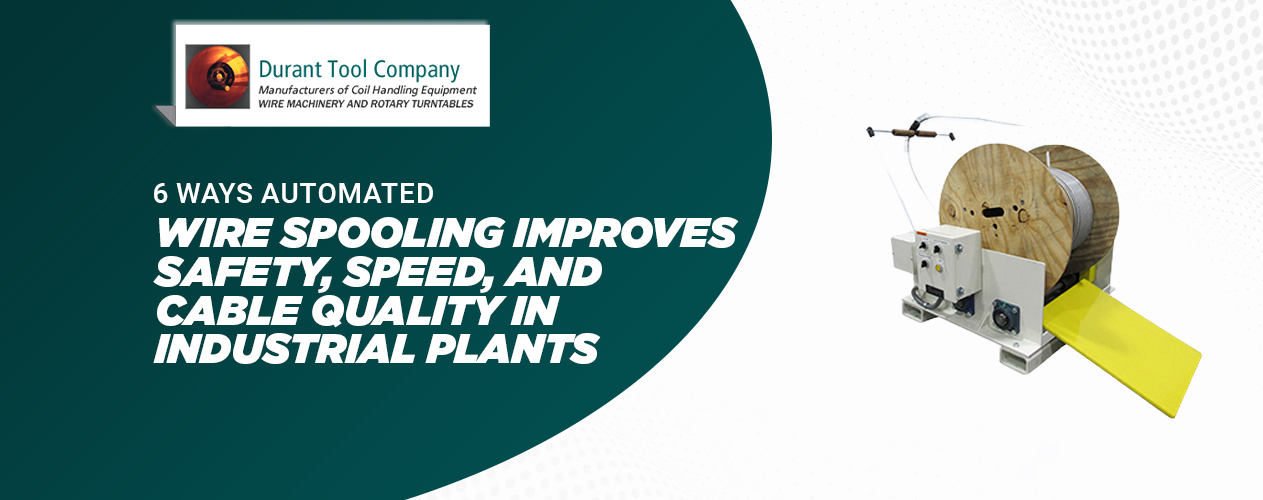
Industrial wire handling is one of those operations that looks simple from the outside — until something goes wrong. A tangled spool, an uneven wind, or a worker strain injury can stop production cold and cost a plant thousands of dollars in downtime. That’s why more U.S. facilities are turning to the automatic wire winding spool machine as a core part of their production line.
These machines handle heavy, repetitive spooling tasks with precision that manual methods simply can’t match. If your plant is still relying on hand-wound spools or older semi-automatic equipment, you’re likely leaving speed, safety, and product quality on the table.
From wire spool uncoilers with forklift leg options to fully automated winding systems, today’s technology is purpose-built for demanding industrial environments — and the benefits go far deeper than convenience.
Key Takeaways
An automatic wire winding spool machine reduces manual labor, improves winding consistency, and helps industrial plants run faster with fewer injuries. It’s one of the most impactful upgrades a wire-handling facility can make.
| Topic | Key Point |
| Safety | Reduces worker exposure to heavy lifting and repetitive strain |
| Speed | Automates high-cycle winding for faster throughput |
| Cable Quality | Delivers consistent tension and layer alignment |
| Downtime | Fewer jams, breaks, and operator errors |
| Flexibility | Handles multiple wire types and spool sizes |
| ROI | Reduces labor costs and product waste over time |
DurantCo specializes in wire handling equipment built for real industrial demands. Their machines are trusted by U.S. plants that need reliability, not guesswork.
Why Automated Wire Spooling Is Changing Industrial Plants
Manual wire spooling has been the standard for decades. Workers wind wire by hand or with basic mechanical assists, managing tension, layer counts, and spool changes themselves. It works — but barely. Human error creeps in. Fatigue sets in. Wire gets kinked, layers wind unevenly, and injuries follow.
Automated systems remove those variables. They control every aspect of the winding process: speed, tension, traverse rate, and layer spacing. The result is a more predictable, repeatable process — one that doesn’t depend on who’s working the shift that day.
Here are six specific ways these machines improve operations.
1. Fewer Workplace Injuries
Wire is heavy. Spools can weigh hundreds of pounds. Repeating the same winding motion for hours causes cumulative trauma injuries — wrist strain, shoulder damage, back problems. These injuries are common in wire-handling facilities and costly in terms of workers’ comp, lost time, and turnover.
An automatic wire winding spool machine removes the worker from the most dangerous parts of the process. The machine handles tensioning, traverse movement, and spool rotation. Workers supervise and manage changeovers rather than manually pulling and guiding wire.
The result: fewer OSHA recordables, lower insurance costs, and a safer floor.
2. Faster Throughput Without Sacrificing Quality
Automation runs at a consistent speed without breaks, slowdowns, or fatigue. A well-configured automatic winding system can process wire significantly faster than a manual crew — and do it the same way every single cycle.
This matters most during high-volume production runs. When your downstream customers need thousands of feet of wire per order, a machine that maintains 95%+ uptime and consistent output is far more valuable than a crew that slows down in the afternoon.
Faster throughput also means quicker order fulfillment. That’s a competitive advantage in today’s market.
3. Consistent Tension and Layer Alignment
Here’s where cable quality gets made or broken. Wire wound under inconsistent tension develops memory — it wants to spring back into the shape it was wound in. That causes problems during installation. Uneven layers also mean the spool holds less wire per unit and increases the risk of wire damage during unwinding.
An automatic wire winding spool machine maintains precise tension throughout the entire wind. Traverse mechanisms control how each layer lays down, keeping spacing tight and even. The final product comes off the spool cleanly, without kinks or memory issues.
This level of consistency is nearly impossible to achieve manually — especially across long production runs.
4. Reduced Downtime from Operator Error
Manual operations have a high error rate. Wire gets crossed. Layers bunch. Tension varies. Each error can mean stopping the line, re-spooling, or scrapping product. Over a week, those small interruptions add up to significant lost production time.
Automated systems are programmed to spec. They follow the same parameters every cycle. When something does go wrong — a wire break, a spool jam — modern machines include fault detection that stops the process immediately and alerts operators rather than allowing the problem to compound.
For plants running servo-based feeding and winding systems, built-in diagnostics can flag wear and maintenance needs before they cause unplanned shutdowns.
DurantCo offers a range of automated wire handling solutions designed to minimize downtime and keep your production line moving. Talk to their team to find the right fit for your operation.
5. Greater Flexibility Across Wire Types and Spool Sizes
Not every plant handles the same wire. You might run copper one week and steel cable the next. Spool sizes vary. Wire diameters change by order. Manual systems often struggle to adapt quickly. Changeovers take time, and settings are reset by hand — which introduces error.
Modern automatic wire winding spool machines are built for flexibility. Programmable controllers store multiple product profiles. An operator can switch from one wire type to another by selecting a preset. The machine adjusts tension parameters, traverse speed, and layer counts automatically.
This is especially useful for plants that handle spooling wire rope alongside standard electrical wire. Wire rope has different tension requirements and layer behavior. Automated systems manage those differences without the operator needing deep technical expertise for every product.
6. Long-Term Cost Reduction
The upfront cost of automation can feel significant. But the numbers work out quickly for most industrial plants.
Consider what manual winding actually costs:
- Labor: Multiple operators per shift, multiplied across shifts
- Errors: Scrapped product, rework time, raw material waste
- Injuries: Workers’ comp claims, medical costs, productivity loss
- Inconsistency: Customer returns or complaints due to poor spool quality
An automatic wire winding spool machine reduces or eliminates most of these costs. Many facilities recoup their investment within the first year or two of operation, particularly when running high-volume production.
Choosing the right machine matters too. This wire spooler guide breaks down how to evaluate manual vs. motorized options based on your plant’s specific output needs, wire types, and budget.
Ready to upgrade your wire handling process? DurantCo’s team can walk you through the right equipment for your production volume, wire type, and floor space — no pressure, just answers.
What to Look for in an Automated Wire Winding Machine
Before purchasing, match the machine to your actual production requirements. Here’s a quick checklist:
- Wire type and diameter range — Confirm the machine handles your specific products
- Spool size capacity — Check both minimum and maximum spool dimensions
- Traverse system — Look for precision servo-controlled traverse for consistent layering
- Speed range — Make sure output speed matches your line’s throughput goals
- Control system — Programmable presets save time during product changeovers
- Footprint — Measure your floor space carefully, including clearance for spool loading
Getting these details right upfront saves significant time and cost during installation and commissioning.
Conclusion
Industrial plants that invest in automation don’t just improve one area — they improve all of them at once. An automatic wire winding spool machine touches safety, quality, speed, and cost simultaneously. That’s a rare kind of operational upgrade. The technology is mature, the ROI is proven, and the plants already using it are running leaner and safer than those that haven’t made the switch yet. If your facility handles significant wire volume and still relies on manual or semi-automated spooling, the question isn’t whether automation makes sense — it’s how soon you can get it running.
Your next production shift could be running faster, cleaner, and safer — Durant can help you make that happen.
FAQs
What types of wire can an automatic wire winding spool machine handle?
Most machines are designed to handle a wide range — from fine electrical wire to heavier gauge cable and wire rope. Always confirm the machine’s diameter and tension range matches your specific product before purchasing.
How long does it take to install and commission an automated wire spooling system?
Installation timelines vary by system complexity, but most standard machines can be installed and operational within a few days to a couple of weeks. Supplier support during commissioning speeds up the process significantly.
Can automated wire winding machines integrate with existing production lines?
Yes. Many modern machines are designed for integration with upstream and downstream equipment. Your equipment supplier should assess your line layout and advise on compatibility before purchase.
How much maintenance does an automatic wire winding spool machine require?
Routine maintenance typically includes lubrication, traverse mechanism inspection, and periodic calibration of tension controls. Servo-based systems often include diagnostics that flag maintenance needs before failures occur.
What is the typical return on investment timeline for automated wire spooling equipment?
Most industrial plants see ROI within one to two years, depending on production volume, current labor costs, and the rate of product defects or rework. High-volume facilities often see payback even faster.


