 Menu
Menu

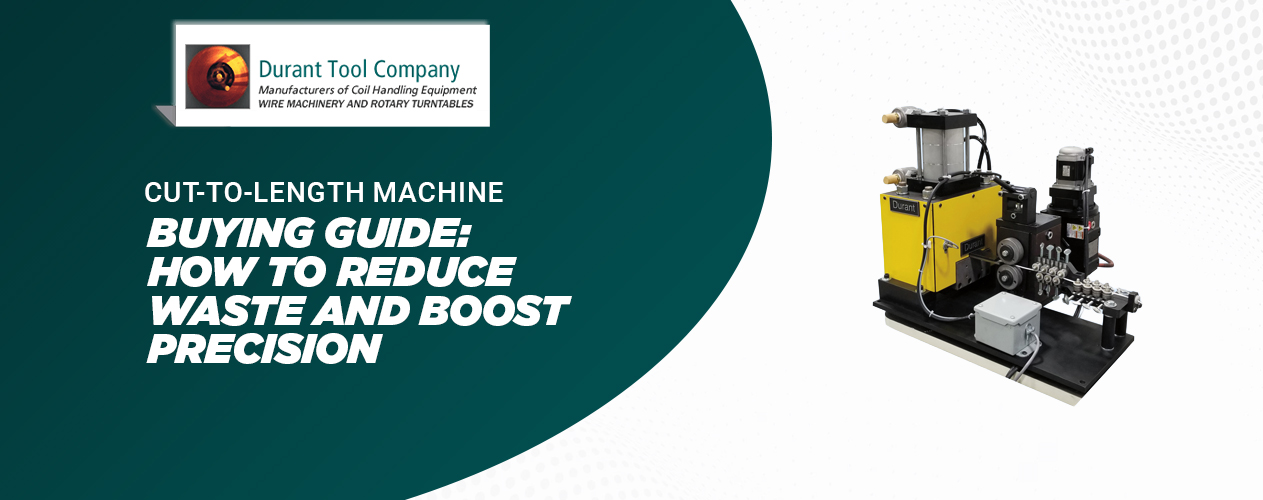
Buying a cut to length machine is one of the bigger decisions a metal shop or service center can make. The right system turns heavy coils of steel or aluminum into clean, flat sheets all day long.
The wrong one creates scrap, slows you down, and costs more than it should. Picking well comes down to a few key things: how the machine measures, how it cuts, and how much material it can handle.
Get those right and you save money on every coil that runs through the line. A good brand that does this best builds machines around that simple idea.
Most buyers focus on the cutting blade. The real money is hiding in the millimeters you never see.
Key Takeaways
A cut to length machine takes a rolled coil of metal, flattens it, measures it, and cuts it into flat sheets of an exact length. To reduce waste and boost precision, you want a machine with a strong measuring system, the right type of shear for your speed and material, and enough capacity to handle the thickness and width you run most often. Matching the machine to your real production needs is what keeps scrap low and accuracy high.
| What to Look For | Why It Matters |
| Measuring system (encoders, servo feed) | Controls how accurate each cut is |
| Shear type (rotary, flying, stop-and-go) | Sets your speed and edge quality |
| Steel cutting capacity (thickness and width) | Decides what jobs the machine can run |
| Leveling and flattening quality | Affects flatness and downstream fit |
| Automation and controls | Lowers setup waste and operator error |
| Build quality and support | Keeps the line running for years |
Durant Tool Company has spent decades helping shops match the right cutting and feeding equipment to the work they actually do.
What Is a Cut-to-Length Machine?
A cut to length machine is an industrial system that turns a coil of metal into flat sheets of an exact length. Metal usually arrives at a factory as a big roll, kind of like a giant spool of ribbon but made of steel or aluminum. Nobody builds cars or appliances from a rolled-up coil. They need flat, sized pieces. The machine does that conversion.
You will also hear it called a CTL machine, a cut-to-length line, or a blanking line. They all describe the same basic job: unroll the coil, straighten it, measure it, cut it, and stack the finished sheets. The sheets that come out are often called blanks, and they head off to be stamped, welded, or shaped into parts.
The big benefit is repeatability. A good machine can cut thousands of sheets a day, and each one comes out the same size. That kind of consistency is hard to match by hand, especially with tough materials like steel.
The term “wire cutting machine” sometimes overlaps with cut-to-length equipment. Smaller versions cut wire and cable to length, while larger lines handle wide coils of sheet metal. Same idea, very different scale.
If you want a deeper look at the basics, this overview of how a CTL line works walks through each stage of the process.
How a Cut-to-Length Line Works
Understanding the steps makes the buying choices much clearer. Each stage of the line affects either accuracy, waste, or both. Here is the journey a coil takes from start to finish.
- Loading the coil. The coil is placed on an uncoiler, which holds the heavy roll and unwinds it slowly. Guides keep the strip centered so it does not drift to one side.
- Straightening and leveling. The metal still holds the curve from being rolled. It passes through straightener rolls and levelers that push and pull it flat. Flatness here is what makes the final sheets usable.
- Measuring the length. Encoders track exactly how much material moves through the line. Sensors confirm the reading. The control system uses this data to time each cut.
- Cutting. Once the strip reaches the target length, the shear cuts it. This is the step most people picture first, but it depends on everything before it.
- Stacking. The finished sheets are guided into neat piles, kept square, and moved onto pallets for shipping.
If the coil is loaded crooked or the leveling is weak, every cut after that is off. Accuracy is built into the whole line, not just the blade.
A coil cutting machine is only as good as its weakest stage. A fast shear paired with a poor measuring system still produces inconsistent sheets. That is why smart buyers look at the full system, not one flashy part.
Why Accuracy Matters More Than You Think
A few millimeters sounds like nothing. On one sheet, it is. But a cut to length machine does not cut one sheet. It cuts thousands a day, and small errors stack up fast.
Think about it this way. If every sheet is slightly too long, you are wasting material on each cut. Over a single coil, that adds up. Over a year, it can mean a serious amount of money walking out the door as scrap. If sheets come out too short, they get rejected, and now you are wasting the whole piece plus the time spent making it.
Metal cutting accuracy affects more than waste. It affects:
- Fit during assembly. Parts that are the right size go together cleanly.
- Downstream processes. Stamping and welding work better with consistent blanks.
- Customer trust. Tight tolerances let you win jobs that loose ones cannot.
- Rework time. Accurate cuts mean fewer pieces to scrap or redo.
Modern systems can hold very tight tolerances, often within fractions of a millimeter on well-built lines. The exact number depends on the machine, the material, and how well it is maintained. The point is that accuracy is not a luxury feature. It is where the savings live.
A machine that cuts fast but inconsistently can cost you more than a slower, more precise one. Speed only helps if the sheets pass quality checks.
How to Reduce Waste with the Right Machine
Waste reduction is one of the main reasons shops upgrade their equipment. A good cut to length machine cuts scrap in several ways at once. Here is where the savings come from.
Exact length control. Automated measuring keeps every sheet on spec. You stop producing pieces that are too long, which wastes metal, or too short, which wastes the whole piece.
Better edge and alignment control. Strong guides and alignment systems keep the strip tracking straight. Less drift means less trimmed-off edge waste.
Fewer setup losses. Quick coil changeovers and programmable job settings cut the scrap that piles up during transitions. Every time you switch jobs on a manual setup, you tend to lose material. Automation shrinks that loss.
Adaptive feed control. Higher-end lines adjust in real time to changes in coil tension or thickness. That keeps yield steady even when the material is not perfectly uniform.
Industry case studies on automated cutting equipment show that moving from manual measurement to precision-controlled lines can lift material yield noticeably. The exact gain depends on your starting point and your material mix, but the direction is always the same: more usable sheets per coil.
Here is a simple way to think about the payback:
| Source of Waste | How the Right Machine Helps |
| Over-long or short sheets | Servo feed and encoders hold exact length |
| Edge trim and drift | Alignment systems keep the strip tracking true |
| Changeover scrap | Programmable settings speed up job switches |
| Material variation | Adaptive control adjusts on the fly |
Durant Tool Company offers feeding and cutting equipment built to hold tight tolerances, which is exactly what keeps scrap low on repeat jobs.
Types of Cut-to-Length Lines and Shears
Not every cut to length machine cuts the same way. The shear is the heart of the system, and the type you choose shapes your speed, your edge quality, and your cost. Here are the main options and where each one fits.
Stop-and-Go (Stationary) Shear
The strip stops moving for a moment, the blade cuts, and then the strip starts again. This is a simpler, lower-cost setup. It works well for heavier materials and shops that do not need top speed. The trade-off is throughput, since the line pauses for every cut.
Rotary Shear
A rotary shear uses a rotating blade mechanism to cut without fully stopping the strip. It is widely valued for tight tolerances and clean, low-burr edges. Many shops consider rotary shears among the best choices when dimensional accuracy is the priority, especially for cold-rolled steel, stainless, and aluminum.
Flying Shear
A flying shear travels along with the moving strip, cuts on the fly, and then returns to its starting position. Because the line never stops, throughput is high. This makes it a strong fit for high-volume work in automotive, construction, and appliance production. The trade-off is higher upfront cost and more technical upkeep.
Pendulum (Swing) Shear
A pendulum shear swings to follow the strip during the cut. It is often used for heavier gauges where a balance of speed and cutting force is needed.
Match the shear to your real workload. If most of your jobs are slower, precise cuts, a rotary shear may serve you better than a costly flying shear you rarely push to its limits.
Here is a quick comparison to help you weigh the options:
| Shear Type | Best For | Strength | Trade-Off |
| Stop-and-go | Lower volume, heavy gauge | Simple, lower cost | Slower throughput |
| Rotary | Tight tolerances | Clean edges, accuracy | Moderate speed |
| Flying | High-volume production | Continuous, fast | Higher cost and upkeep |
| Pendulum | Heavier materials | Speed plus force | More complex setup |
Understanding Steel Cutting Capacity
Capacity is where a lot of buyers go wrong. A machine that handles thin aluminum beautifully may struggle with thick steel plate. Matching the machine to your material is essential.
Steel cutting capacity comes down to two main numbers: thickness (gauge) and width. A light-gauge line might handle thin material in the range of fractions of a millimeter up to a few millimeters. Heavy-gauge lines are built for thick plate, sometimes a quarter inch and well above, depending on the design.
When you size a machine, think about the work you do most often, not the rare extreme job. Buying a heavy-duty line for occasional thick jobs can leave you paying for capacity you mostly do not use. Buying too light means the machine struggles, wears faster, and cuts poorly on your toughest material.
Key capacity factors to confirm:
- Maximum and minimum thickness the line can cut cleanly.
- Maximum coil width the machine accepts.
- Coil weight and outer diameter the uncoiler can hold.
- Material types the line is rated for, since steel, stainless, and aluminum behave differently.
Material hardness matters as much as thickness. Stainless steel and high-strength alloys put more strain on a line than mild steel of the same gauge. Always confirm the rating for the toughest material you run.
The right capacity match protects both your sheets and your machine. It is one of the clearest ways to avoid buyer’s remorse.
The Buying Factors That Actually Matter
Now we get to the core of it. When you compare a cut to length machine from one supplier to the next, these are the points that decide whether you made a smart purchase or an expensive mistake. Here are the factors worth weighing carefully.
- Measuring and feed system. Look closely at the encoders, servo feed, and control software. This is the single biggest driver of metal cutting accuracy. A strong measuring system pays for itself in saved material.
- Shear type and edge quality. Choose the shear that fits your speed and tolerance needs. Ask for sample cuts in your own material to judge burr and edge quality firsthand.
- Steel cutting capacity. Confirm the thickness, width, and material ratings against the jobs you run most. Do not over-buy or under-buy capacity.
- Leveling and flatness. The leveler is easy to overlook, but flat sheets are the whole point. Weak leveling shows up as wavy or bent blanks that cause trouble down the line.
- Automation and controls. Programmable job settings, quick changeovers, and clear operator screens reduce setup waste and human error. Better controls mean less scrap during transitions.
- Build quality and reliability. A line that runs for years with low downtime beats a cheaper one that needs constant repair. Ask about the frame, the drive components, and the wear parts.
- Service and support. Strong support, available parts, and good documentation keep the machine running. A great machine with no support behind it can become a costly paperweight.
- Total cost of ownership. Look past the sticker price. Factor in energy use, maintenance, downtime, scrap rates, and operator labor over the machine’s full life.
Ask each supplier to run your actual material and show you measured results. Sample sheets tell you far more about real performance than a spec sheet ever will.
These eight factors work together. A machine that scores well across all of them is the one that quietly saves you money every single shift.
Ready to match a machine to your production? Durant Tool Company can help you weigh capacity, accuracy, and cost so you buy the right system the first time.
New vs. Used Cut-to-Length Lines
Price is real, and not every shop can buy new. So how do you decide? Both new and used CTL machine options have a place, and the right call depends on your situation.
A new line gives you the latest automation, servo control, and energy-efficient motors. You also get full warranty coverage and the longest service life. The downside is cost and sometimes long lead times.
A used line can offer real savings and a faster install, since the machine already exists. For a shop testing a new product line or working with a tight budget, a well-maintained used line can make sense. The risk is unknown wear and weaker support, so inspection matters a lot.
Things to check on any used machine:
- Condition of the rolls and blades, since these wear and affect accuracy.
- Control system age, because older electronics may be hard to service.
- Maintenance history, to gauge how hard the machine was run.
- Available parts and support, so you are not stranded later.
A used line with a strong maintenance record and modern controls can outperform a cheap new import. Condition and support often matter more than age alone.
Whichever route you take, the same accuracy and capacity questions apply. The goal is a machine that fits your work, not just one that fits your budget today.
Common Industries That Rely on CTL Lines
It helps to see where these machines earn their keep. A cut to length machine sits behind a huge range of everyday products. Knowing your industry’s demands helps you spec the right line.
- Automotive. Car bodies, frames, and panels start as flat blanks cut from coil. Tolerances are tight and volumes are high.
- Construction. Roofing, siding, beams, and framing parts come from cut steel sheets. Width and capacity tend to matter here.
- Appliances. Washing machines, refrigerators, and ovens need flat, clean panels with good surface quality.
- HVAC. Ductwork and unit panels rely on consistent, flat sheet stock.
- Electronics. Casings and enclosures are cut from precise, thin-gauge sheets.
Each industry leans on different strengths. High-volume automotive work pushes toward flying shears and strong automation. Tight-tolerance electronics work favors rotary shears and excellent measuring systems. Matching your automated cutting equipment to your industry’s real demands is the heart of a smart purchase. For shops that also handle wire and cable, choosing the right cable length measuring machine follows many of the same principles.
Conclusion
Choosing the right cut to length machine is not about chasing the flashiest blade or the highest top speed. It is about matching the measuring system, the shear type, and the cutting capacity to the work you actually do, day in and day out. Get those three right and waste drops, accuracy climbs, and every coil delivers more usable sheets. That is the quiet math that keeps a shop profitable, and it shows up on every pallet that leaves the line.
When you are ready to spec a machine that fits your real production needs, the team at Durant Tool Company can help you cut the guesswork as cleanly as the steel.
FAQs
How accurate is a cut to length machine?
Modern systems can measure and cut within fractions of a millimeter, though the exact tolerance depends on the machine, the material, and how well it is maintained.
Can one CTL machine cut both thin and thick metal?
Some lines are flexible across a range of gauges, but most are optimized for either light or heavy material, so match the machine to the thickness you run most.
What is the difference between a rotary shear and a flying shear?
A rotary shear is prized for clean, accurate cuts at moderate speed, while a flying shear cuts without stopping the strip and is built for high-volume throughput.
How does a CTL line reduce material waste?
It controls exact sheet length, keeps the strip aligned, speeds up changeovers, and adjusts to material variation, all of which lower scrap per coil.
Is a used cut to length line worth buying?
A well-maintained used line with modern controls and good support can offer strong value, but careful inspection of the rolls, blades, and maintenance history is essential.


