 Menu
Menu

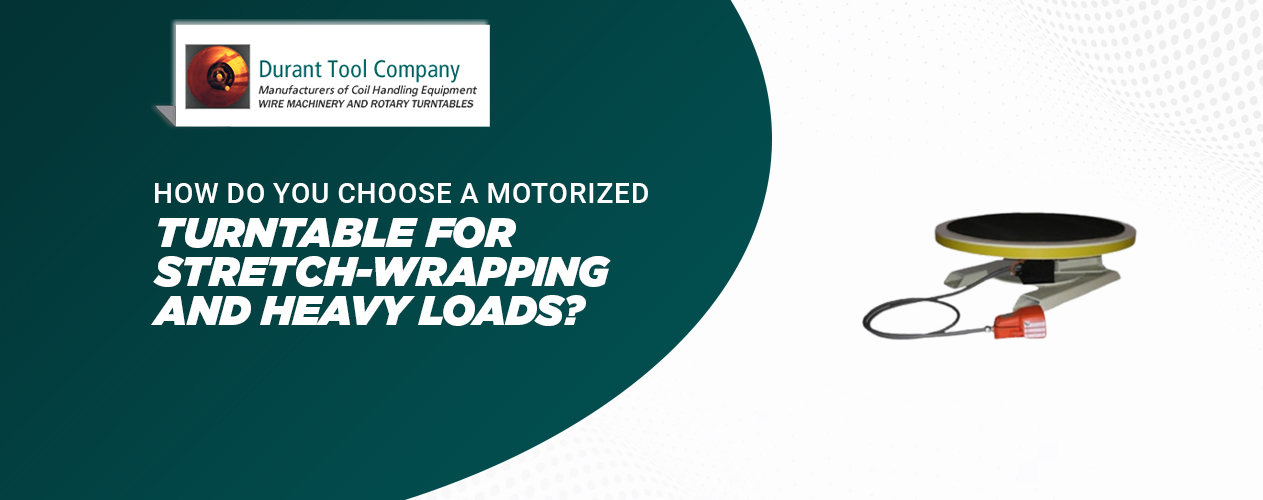
How to Choose a Motorized Turntable for Stretch Wrap and Heavy Loads
A motorized turntable is a powered, rotating platform that spins a load for you. You set a pallet, a machine, or a crate on top, press a pedal, and the platform turns at a steady speed. No pushing. No shoving. No sore backs by lunchtime.
Picking the right one matters, but keeping it in good shape matters just as much. A well-chosen table that never gets a little care will wobble, grind, and quit at the worst possible moment. Usually on a Friday. Usually during a rush order.
The good news is that choosing well and maintaining well are both easier than they look. The trick is knowing which numbers actually matter, and which ones are just there to fill up a spec sheet.
Key Takeaways
To choose a motorized turntable for stretch wrapping and heavy loads, start with your heaviest load, then pick a table rated well above it, sized to your pallet footprint, with variable speed and simple safety controls. After that, a short maintenance routine keeps it turning smoothly for years.
| What to Check | Why It Matters | Simple Rule of Thumb |
|---|---|---|
| Weight capacity | Overloading wears bearings and motors fast | Buy a rating above your heaviest load, not equal to it |
| Platter diameter | Loads that hang over the edge wobble and tip | Match or slightly exceed your pallet footprint |
| Speed control | Film tension and safety depend on steady rotation | Pick variable speed you can dial up or down |
| Height and loading | Loading method affects safety and speed | Plan around your forklift or pallet jack |
| Safety controls | Operators need to stop fast | Look for foot pedals and emergency stop options |
| Maintenance | Small care prevents big breakdowns | Clean, inspect, and check bolts on a schedule |
USA-Made Turntables Built Tough
Durant Tool Company builds rugged, USA-made turntables for factories, packaging lines, and display floors as tough as the people loading them.
Explore TurntablesWhat Is a Motorized Turntable, and Why Would Anyone Want One?
A rotary turntable is a flat, round platform that turns on a center shaft and bearings. Some turn by hand. Others use an electric motor and a drive to spin the load for you.
When a motor is added, you get a powered table that rotates at a set speed. Operators usually control it with a foot pedal or a hand control. That keeps both hands free for wrapping, inspecting, or assembling.
Here are a few common jobs these tables handle:
- Stretch wrapping pallets for shipping
- Assembly work on large parts, so workers stay in one spot
- Inspection and quality checks from every angle
- Product displays at trade shows and showrooms
A stretch wrap turntable is built for one of the most common of these jobs. It spins a loaded pallet while a worker holds the film roll in place. Instead of walking backward in circles around the pallet like a confused ceiling fan, the worker stands still and lets the load do the moving. You can see how that setup works on dedicated stretch wrap turntable models built for packaging lines.
An industrial motorized turntable is designed for factory duty, not showroom duty. It usually has a heavier base, stronger bearings, and a motor sized for long shifts. Display tables may look similar, but they are not always built for pallets and forklifts.
Motorized or Manual: Does Your Floor Really Need a Motor?
Not every job needs power. Hand-turned tables still have a place, and non-motorized turntables can work well for light loads and occasional use.
The problem shows up when loads get heavy or jobs repeat all day. Pushing a heavy load in circles, hour after hour, is hard on shoulders, backs, and knees.
| Feature | Manual Turntable | Motorized Turntable |
|---|---|---|
| Power source | Human muscle | Electric motor |
| Best for | Light, occasional jobs | Heavy loads, repeated tasks |
| Speed control | Depends on the worker | Steady and adjustable |
| Operator effort | Pushing and pulling | Pressing a pedal |
| Wrapping quality | Can be uneven | More consistent |
According to the National Safety Council, overexertion is a leading cause of serious work injuries that lead to days away, restricted duty, or job transfers. Letting a motor handle the pushing is one simple way to cut down on that kind of strain.
So how do you pick the right one? That comes down to a short list of checks.
8 Things to Check Before Buying a Motorized Turntable for Heavy Loads
Shoppers looking for a motorized turntable heavy duty enough for daily pallet work often focus on price first. That is a bit like buying boots by color. Start with these eight checks instead.
1. How Much Weight Will It Really Carry?
Find your heaviest load, then add a safety buffer. If your biggest pallet weighs 1,800 pounds, a 2,000-pound table is cutting it close. Stepping up a size gives the bearings and motor room to breathe.
Industrial tables come in a wide range of ratings. Some manufacturers offer models that handle several thousand pounds, and a few go well beyond that for special projects.
2. Is the Platter Big Enough for Your Pallet?
A standard 48 x 40 inch pallet needs a platter that supports it properly. Loads that hang too far over the edge can wobble or tip.
- Measure your largest pallet or base
- Check how far the load itself overhangs the pallet
- Choose a diameter that supports the load without crowding your aisle
3. Can You Adjust the Speed?
Variable speed is a big deal for stretch wrapping. Too fast, and the film tears or wraps loosely. Too slow, and your wrapping line crawls. Adjustable speed lets you tune the spin for tall loads, short loads, and everything in between.
If you want a deeper look at variable speed turntable options, speed control deserves its own spot on your checklist.
Before you buy, time how long your team currently takes to wrap one pallet. That number gives you a baseline, so you can see how much time the new table actually saves.
4. How Will You Load It?
Height matters more than people expect. A high-profile table sits up off the floor, which suits forklift loading. A low-profile or pit-mounted table sits closer to floor level, which can help with pallet jacks.
Ask your team a simple question: how does the load get on and off? The answer points you toward the right height.
5. What Safety Controls Come With It?
Good controls keep operators in charge at all times. Look for:
- A foot pedal so hands stay free
- A hand control option for different setups
- An emergency stop or braking option for quick stops
- Clear, easy-to-reach switches
Heads Up: Never ride, lean on, or reach across a spinning table. It sounds obvious, but a slowly turning platform can lull people into feeling safe. Set clear floor markings and train every operator before the first shift.
6. Will the Surface Hold Up in Your Shop?
Your work environment shapes the build you need. Wet, dusty, or food-grade areas need different finishes than a dry warehouse.
- Anti-slip rubber covers help keep loads from sliding
- Stainless steel construction suits wash-down or clean areas
- Painted steel usually works fine in standard warehouses
7. Is the Motor Built for Your Shift Length?
A table that runs a few times a day has an easy life. A table that runs every few minutes for two shifts needs a stronger motor and drive. Tell the manufacturer how often it will run, not just how much weight it holds.
8. What Warranty and Support Do You Get?
A solid warranty tells you the maker stands behind the product. Also check if service manuals, spare parts, and phone support are easy to get. When something needs attention, you want a real answer, not a hold song.
Need Faster, Easier Film Wrapping?
Our stretch wrap turntables are built for steady rotation, heavy pallets, and long shifts on the packaging line.
Shop Stretch Wrap TurntablesHow Do You Match a Turntable to Your Stretch-Wrap Routine?
Specs are helpful, but your daily routine tells the real story. Follow these steps to match the table to the job.
- List every load type: Write down the weight, height, and base size of each common pallet. Your table must handle the toughest one.
- Count your wraps per day: A few wraps a day is light use. Dozens per shift means you need a heavier drive.
- Map the space: Measure the floor area, aisle width, and forklift turning room around the table.
- Pick your controls: Decide who runs the table and how. A foot pedal suits most solo wrapping jobs.
- Plan for growth: If your loads are getting heavier each year, size up now instead of buying twice.
Tall, narrow loads are the trickiest to wrap. Slower speeds and a centered load help keep them steady while the film goes on.
Some shops wonder about building a turntable yourself to save money. That can work for small hobby projects. For heavy pallets and daily production, a factory-built table from Durant Tool Company with rated bearings and proper controls is usually the safer bet.
Keep It Spinning: A Simple Maintenance Routine
Even the toughest industrial motorized turntable needs a little attention. The good news is that most care takes minutes, not hours.
Daily Checks
- Clear the surface: Remove film scraps, dust, and debris. Film scraps love to wrap around moving parts.
- Watch the first spin: Listen for grinding, clicking, or squealing. New noises are early warning signs.
- Test the controls: Make sure the pedal and stop controls respond right away.
Weekly Checks
- Inspect cords and connections: Look for cuts, crushed spots, or loose plugs. Forklifts and cords are not friends.
- Check for wobble: A table that rocks or tilts may have a loose bolt or a worn bearing.
- Look at the base: Make sure it sits flat and has not shifted.
Monthly or Scheduled Checks
- Tighten fasteners: Vibration slowly loosens bolts over time.
- Follow the lubrication schedule: Use only what the manufacturer recommends.
- Review the manual: The turntable service manuals explain part-specific care, so you are not guessing.
Keep in Mind: Always disconnect power before cleaning under the platter or touching the drive. A quick lockout step takes seconds and protects fingers that took years to grow.
A rotary turntable that gets these small checks will usually reward you with smooth, quiet spinning. Skip them, and the table will let you know. Loudly.
Ready to Find the Right Turntable?
Contact our specialists today for help picking the right size, capacity, and control options for your floor.
Talk to a SpecialistCommon Mistakes to Avoid When Buying
A few buying slip-ups show up again and again. Dodge these and you are already ahead of the pack.
- Buying for today only: Loads tend to grow. Your table should keep up.
- Ignoring the loading method: A great table in the wrong height slows everyone down.
- Skipping speed control: Fixed speed feels fine until you wrap your first tall load.
- Forgetting about maintenance access: You will need to reach the base and drive someday.
- Picking a display table for factory work: A showroom stretch wrap turntable it is not.
Choosing a motorized turntable heavy duty enough for your real workload saves money in the long run. Fewer repairs, fewer injuries, and fewer grumbles from the packaging crew.
Conclusion
The right motorized turntable comes down to a few smart choices: real weight capacity with room to spare, a platter sized to your pallets, adjustable speed, easy loading, and solid safety controls. Match those to your daily routine, and your stretch-wrapping line will run faster with less strain on your team.
Buying well is only half the job, though. Regular cleaning, quick inspections, and scheduled upkeep keep any industrial motorized turntable running smoothly for the long haul. A few minutes of care each week beats a surprise breakdown during peak season every time.
Your pallets are going in circles anyway, so they might as well do it on a table built to last. Reach out to Durant Tool Company for expert support, service help, or a closer look at turntables built for your heaviest jobs.
FAQs
Can a motorized turntable run on standard shop power?
Many industrial turntables run on standard 115V power, which fits most shop outlets. Always confirm the voltage and amp needs with the manufacturer before installation.
Can I get a turntable in a custom size?
Yes, many manufacturers offer special diameters, heights, and finishes for unusual loads. Custom sizes usually take longer to build, so plan ahead.
Does a turntable need to be bolted to the floor?
Some tables are heavy enough to stay put, while others benefit from anchoring. Follow the manufacturer's installation guide for your model and load weight.
Can one turntable handle both wrapping and assembly work?
Yes, as long as it has the right capacity and adjustable speed for both tasks. Indexing options can also help if the job needs the table to stop at set positions.
How long does a motorized turntable usually last?
With proper sizing and regular maintenance, a well-built industrial turntable can last many years. Overloading and skipped upkeep are the most common reasons tables wear out early.


