 Menu
Menu

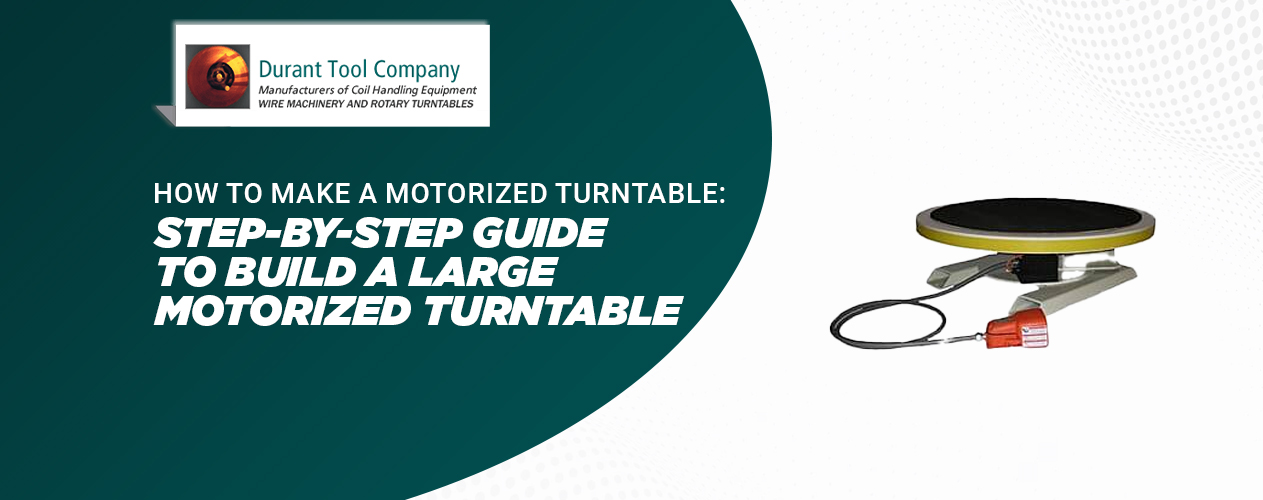
A spinning platform can change how you work, display products, or capture photos. Learning how to make a motorized turntable gives you full control over size, speed, and weight capacity. You can skip the high cost of store-bought models and build something that fits your exact needs.
Many shops, photographers, and hobbyists are choosing custom builds over ready-made motorized turntable units to save money and get the exact specs they want.
This guide breaks down every part of the build, starting with the basics you need to know before you pick up a single tool.
Key Takeaways
To make a motorized turntable, you need a sturdy base, a center bearing, a motor, and a top platform. You connect the motor to the platform with a belt, chain, or direct drive. Then you wire the motor to a speed controller and power source. With the right parts and careful steps, you can build one in a weekend.
| Step | What You Do | Why It Matters |
| 1. Plan the Size | Choose diameter and weight limit | Sets the scale for all parts |
| 2. Pick the Bearing | Use a lazy Susan or thrust bearing | Keeps the spin smooth |
| 3. Select the Motor | Match torque to the load | Prevents stalling and burnout |
| 4. Build the Frame | Cut wood or weld steel | Holds everything in place |
| 5. Connect the Drive | Belt, chain, or direct gear | Transfers power to the top |
| 6. Wire the Controls | Add a speed dial and switch | Lets you adjust the spin |
| 7. Test and Adjust | Run light loads first | Catches problems early |
Durant Tool Company has helped makers and shop owners across the USA build reliable spinning platforms for over 60 years.
What Is a Motorized Turntable?
A motorized turntable is a flat, round platform that spins on its own using an electric motor. You place objects on top, flip a switch, and the platform rotates at a steady speed. These tools show up in photo studios, auto shops, trade show booths, and factory lines.
The basic parts stay the same no matter the size:
- Top platform (the surface that spins)
- Center bearing (the part that lets it turn)
- Motor (the power source)
- Drive system (belt, chain, or gear)
- Frame or base (the support)
- Speed controller (to adjust rotation)
Small versions can hold a coffee mug. Big ones can spin a full-size car. Your build depends on what you plan to place on top.
Tools and Materials You Will Need
Before you start, gather your supplies. A clean workbench and the right tools save hours of frustration.
Tools
- Drill and drill bits
- Jigsaw or circular saw
- Wrench set
- Screwdrivers
- Measuring tape
- Pencil and square
- Wire stripper
- Safety glasses and gloves
Materials
- Plywood or steel sheet for the platform
- Lumber or steel tubing for the frame
- Lazy Susan bearing or thrust bearing
- DC or AC gear motor
- Drive belt, chain, or coupler
- Power supply matched to your motor
- Speed controller (PWM for DC motors)
- Screws, bolts, and washers
- Electrical wire and connectors
Step-by-Step Guide on How to Build a Motorized Turntable
Follow these steps in order. Skipping ahead often leads to rework.
Step 1: Plan the Size and Load
Start with the heaviest item you plan to spin. A small product photo setup might only need a 12-inch platform. A display for heavy machinery might need 48 inches or more. Write down the diameter and the maximum weight.
For example, if you want to spin a 200-pound engine block, you need a thick steel platform and a motor with high torque. If you just want to spin small pottery, a plywood disc and a light motor will do.
Step 2: Choose the Right Bearing
The bearing is the heart of the build. It keeps the platform level and smooth.
- Lazy Susan bearing: Good for light to medium loads under 1,000 pounds.
- Thrust bearing: Handles heavy downward pressure and works well for industrial jobs.
- Slewing ring bearing: Best for very heavy loads and large diameters.
Match the bearing to your load. A bearing that is too small will wear out fast and wobble.
Step 3: Pick the Motor
Motor choice matters most for smooth operation. You want a gear motor because it reduces speed and boosts torque. A direct motor spins too fast for most turntable jobs.
Look at two numbers:
- RPM (rotations per minute): Most turntables run between 1 and 10 RPM.
- Torque: Measured in inch-pounds or Newton-meters. Higher torque moves heavier loads.
A 12V or 24V DC gear motor works great for small and medium builds. AC motors with gearboxes handle bigger jobs.
Step 4: Build the Base and Frame
Cut your base material to size. For a wood build, use a plywood square a few inches wider than the platform. For steel, weld a square frame with cross supports.
Attach the bearing to the center of the base. Use bolts, not just screws, for anything over 50 pounds. Check that the bearing sits flat and level.
Step 5: Attach the Top Platform
Cut your top platform as a perfect circle. A jigsaw works for wood. A plasma cutter or CNC machine works for steel.
Center the platform on top of the bearing. Bolt it down through the bearing’s mounting holes. Spin it by hand to check for wobble. Fix any uneven spots now, not later.
Step 6: Install the Drive System
You have three main choices for connecting the motor to the platform:
- Direct drive: The motor shaft connects straight to the platform center. Simple but limits placement.
- Belt drive: A pulley on the motor turns a larger pulley on the platform. Quiet and forgiving.
- Chain drive: Strong and precise, good for heavy loads.
- Friction drive: A rubber wheel on the motor presses against the edge of the platform.
Mount the motor firmly. Any wobble in the motor mount will show up as jerky spinning.
For heavy-duty projects, Durant Tool Company offers custom-built large industrial motorized turntables ready to handle loads that DIY builds cannot.
Step 7: Wire the Motor and Controller
Connect the motor to the speed controller. Then connect the controller to your power supply. A PWM controller works well for DC motors and lets you dial in the exact speed you want.
Follow the wiring diagram that comes with your controller. Double-check polarity before you power up. Add an inline fuse for safety.
Step 8: Test and Adjust
Power on the system with no load first. Listen for grinding or buzzing. Watch for wobble.
Add weight in small steps. A bag of sand or a stack of books works well for testing. Adjust the speed controller to find the smoothest setting.
If you hear squealing, check your belt tension. If the platform stalls, your motor may be undersized.
Tips for Building a Large Motorized Turntable
Big builds come with bigger challenges. Knowing how to build a motorized turntable at a larger scale means planning for extra weight and stress.
Use Stronger Materials
Steel beats wood for any platform over 36 inches. Welded steel frames flex less and last longer. Use 1/4-inch steel plate or thicker for the top.
Double Up on Support
Place a second bearing or set of casters near the outer edge. This stops the platform from sagging or tipping. Industrial builds often use a slewing ring plus edge rollers.
Size Up the Motor
A large motorized turntable needs serious torque. A 1/4 HP gear motor handles most mid-size builds. Jump to 1/2 HP or more for anything spinning vehicles or heavy equipment.
Plan for Power
Big motors draw more current. Use a dedicated circuit. Match your wire gauge to the amp draw to avoid overheating.
Common Mistakes to Avoid
Even skilled builders run into these problems:
- Picking the wrong bearing size. Always size up, not down.
- Skipping the gear reduction. Direct-drive motors spin way too fast.
- Loose motor mounts. Vibration ruins smooth rotation.
- Bad wiring. Always match voltage and add a fuse.
- No test runs. Spin it empty before adding weight.
Fixing these after the build costs more time than doing it right the first time.
Safety Tips
Building a motorized turntable involves sharp tools, heavy parts, and live electricity. Keep these habits:
- Wear safety glasses when cutting or drilling.
- Unplug the motor before any wiring work.
- Keep hands clear of moving parts.
- Add a guard or shroud to cover belts and chains.
- Use a grounded outlet for AC power.
A simple guard can prevent serious injuries.
Ready to stop building and start spinning? Contact Durant Tool Company today for a motorized turntable built to your exact specs.
Conclusion
Learning how to make a motorized turntable opens up new options for display, photography, repair work, and manufacturing. You save money, get the exact size you want, and learn a useful skill along the way. Start small if you are new to builds. Move up to bigger projects once you nail the basics. With careful planning, the right parts, and a steady hand, your turntable will spin smoothly for years.
When your project calls for industrial strength and precision, trust Durant Tool Company to keep your plans turning in the right direction.
FAQs
How much does it cost to build a motorized turntable?
A small DIY build can cost between $75 and $200 for basic parts. Larger industrial-grade builds with heavy-duty bearings and powerful motors can run $500 to $2,000 or more.
What speed should a motorized turntable spin at?
Most product display turntables spin between 1 and 6 RPM. Photography turntables often run slower, around 1 to 3 RPM, for smooth video capture.
Can I use a car windshield wiper motor for a turntable?
Yes, wiper motors work well for small to medium turntables. They already have built-in gear reduction and run on 12V DC, which makes wiring simple.
How do I keep a motorized turntable from wobbling?
Use a flat, true bearing surface and tighten all mounting bolts. Adding edge rollers or a second support bearing near the outer rim also helps eliminate wobble on larger platforms.
Do motorized turntables need maintenance?
Yes, but not much. Grease the bearing once or twice a year, check belt tension every few months, and inspect wiring for wear during heavy use.


