 Menu
Menu

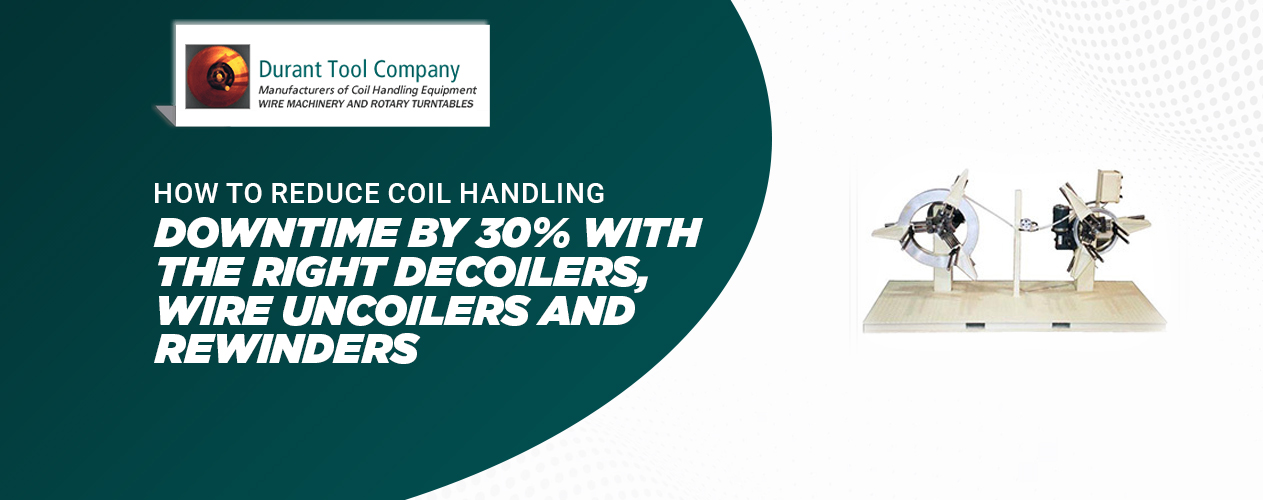
Coil handling looks simple from the outside. A roll of wire or strip metal goes in, parts come out, and the line keeps moving. The truth on the shop floor is messier. Tangled wire, slow coil changes, mismatched mandrels, and bent material can quietly steal hours from a production schedule every single week.
The right coil handling system fixes most of that. Pair the right adjustable core decoiler with well-matched wire uncoilers and rewinders, and you can claw back a meaningful chunk of lost time, sometimes as much as 30 percent.
Most plants don’t lose minutes to one big problem. They lose them to a hundred small ones, and almost all of them start at the coil.
Key Takeaways
A well-matched setup of decoilers, wire uncoilers, and rewinders reduces coil handling downtime by roughly 30 percent by speeding up coil changes, preventing tangles, keeping tension steady, and cutting manual labor at the front of the line. The biggest gains come from picking machines that fit your coil weight, material type, and line speed, then keeping them properly maintained.
| Focus Area | What It Does | Downtime Impact |
| Right-sized decoiler | Holds full coil weight without slipping or wobble | Fewer stoppages from coil shift |
| Powered uncoiler | Feeds material at line speed | Removes drag and tension spikes |
| Quick-change mandrel | Swaps coils in minutes, not hours | Major changeover savings |
| Rewinder match | Takes processed coil cleanly | Less rework and scrap |
| Tension control | Keeps material steady | Fewer tangles and breaks |
| Operator safety features | Reduces injury risk near heavy coils | Fewer line stops and incidents |
Durant Tool Company has spent decades helping manufacturers pair the right coil handling equipment with the right job, so production lines stay moving instead of stalling at the front end.
What a Coil Handling System Actually Does
A coil handling system is the group of machines that load, unwind, feed, and rewind coiled material on a production line. It sits at the start of most metal forming, stamping, wire processing, and cut-to-length operations. The system does the heavy lifting so the downstream equipment can stay focused on shaping the part.
At its core, the system handles four jobs:
- Loading the coil onto a holder or spindle
- Unwinding the material in a smooth, controlled way
- Feeding the line at the right speed and tension
- Rewinding the finished material when needed for storage or shipping
When any one of those jobs slows down, the whole line slows down with it. That’s why operators who run high-volume coil work pay close attention to this part of the floor. A small tweak at the coil end often shows up as big numbers at the production end.
Good to Know: Most production delays blamed on a press or forming machine actually start at the coil. The downstream equipment just shows the symptoms.
Why Coil Handling Downtime Adds Up Faster Than You Think
Downtime at the coil is sneaky. It rarely shows up as one big breakdown. Instead, it shows up as five extra minutes here, a tangled wire there, a slow changeover before lunch. By the end of the week, those small losses can add up to a full shift of lost output.
A few common culprits:
- Manual coil loading that takes two operators and a forklift
- Wrong mandrel size that lets the coil slip or wobble
- Tangling when wire comes off too fast or with no tension control
- Material damage from sharp edges, poor guides, or rough handling
- Slow threading through downstream equipment after each coil change
- Operator injuries from lifting or guiding heavy coils by hand
Each of these costs time. Some also cost money in scrap, repairs, and workers’ compensation claims. The fix usually isn’t a bigger machine. It’s a better match between the machine and the material it handles.
Heads Up: A coil that wobbles or tilts on the mandrel by even a small amount can wear out bearings, damage the material edge, and trigger a line stop. Always check the mandrel fit before starting a run.
Decoilers vs. Uncoilers vs. Rewinders: Clearing the Confusion
These terms get used interchangeably on shop floors, but they describe different jobs. Knowing the difference helps when you spec out a new line or upgrade an old one.
Decoiler. A decoiler holds a coil of material, usually metal strip or sheet, and lets it unwind as it gets pulled into the line. Decoilers can be passive, meaning the downstream pull does the work, or powered, where a motor drives the unwind to match line speed.
Uncoiler. An uncoiler does the same basic job as a decoiler. The term is often used for lighter-duty work or wire applications. A wire uncoiler typically handles smaller, lighter coils and feeds them into a straightener, cut-off, or forming machine.
Rewinder. A rewinder takes processed material, like a slit strip or a cleaned wire, and winds it back into a coil for storage, shipping, or the next stage. A good rewinder machine keeps the wound coil tight, even, and free of telescoping.
The lines between these three blur in real-world catalogs. Some machines combine functions. What matters most is matching the machine to the coil weight, material type, and line speed you actually run.
Pro Tip: When comparing decoilers and uncoilers from different suppliers, focus on three numbers: maximum coil weight, maximum coil outside diameter, and inside diameter range. Those tell you more than the brand name on the side.
7 Ways the Right Decoilers, Uncoilers, and Rewinders Cut Downtime by 30%
This is where the math works in your favor. Each item below tackles a specific piece of lost time. Stack them together, and a 30 percent reduction in coil handling downtime becomes realistic, not a marketing claim.
1. Right-Size the Coil Capacity
Buying a machine that’s too small forces operators to swap coils more often. Buying one that’s too big wastes floor space and capital. The sweet spot is a decoiler or uncoiler rated for the heaviest coil you actually run, with a little headroom for future growth.
Key specs to match:
- Maximum coil weight in pounds or kilograms
- Outside diameter capacity for your largest coil
- Inside diameter range to fit your standard mandrel
- Line speed in feet or meters per minute
A right-sized machine cuts changeovers, reduces operator fatigue, and lets the line run longer between stops.
2. Use Powered Uncoiling for Higher Line Speeds
Passive decoilers work fine for slow lines and light coils. Once you push past a certain speed or coil weight, the downstream pull starts fighting the coil’s mass. That fight shows up as tension spikes, material stretch, and line stops.
A powered uncoiler with a drive motor and speed control matches the unwind rate to the line. Some systems use a dancer arm or photo eye to keep the loop steady. The result is cleaner feeding, fewer stops, and less wear on downstream tooling.
3. Add Quick-Change Mandrels or Cones
Coil changeovers are one of the biggest time sinks in any high-volume operation. A standard mandrel change can take 30 minutes or more. A quick-change mandrel or expandable cone can cut that to a few minutes.
Quick Tip: If your operation runs multiple coil inside diameters, an expandable mandrel that adjusts on the fly saves more time than any single fixed-size option.
4. Control Tension Across the Whole Path
Tension is the silent killer of coil handling efficiency. Too much tension stretches the material and stresses the line. Too little lets the coil unwind freely and tangle.
Modern coil handling systems use one or more of these to keep tension steady:
- Dancer arms that float to absorb speed differences
- Brake systems on the mandrel to slow the coil
- Servo drives that respond to line speed in real time
- Loop pits or accumulators for high-speed continuous runs
The right tension setup keeps material flat, straight, and easy to feed downstream.
5. Match the Rewinder to the Output
A bad rewinder match shows up as loose coils, telescoped layers, or scrap that can’t be shipped. A good rewinder machine matches the output speed, applies steady wind tension, and produces a clean, tight coil every time.
Common rewinder features that reduce downtime:
- Adjustable torque control for different material types
- Traverse guides that lay material evenly across the coil
- Edge sensors to keep wider strip aligned
- Quick-release shafts for fast coil removal
When the rewinder works as cleanly as the decoiler, the whole line runs smoother.
6. Build in Safety Features That Don’t Slow the Line
Heavy coils are dangerous. A poorly handled coil can crush a foot, pinch a hand, or topple off a forklift. Every injury means a line stop, paperwork, and lost productivity.
Modern decoilers and uncoilers include features like:
- Hydraulic coil cars that lift and position coils without manual effort
- Guard rails and light curtains around moving parts
- Two-hand controls for any pinch-point operation
- Emergency stops within easy reach
Safer machines mean fewer incidents, fewer stops, and a steadier line.
Why It Matters: A single coil-related injury can shut down a line for hours and trigger inspections that last days. Safety features pay for themselves long before the first incident.
7. Integrate the Coil Handling System with Downstream Equipment
The biggest gains come when the decoiler, uncoiler, straightener, feeder, and rewinder all talk to each other. A coil handling system with integrated controls can pause the unwind when the press stops, slow the rewinder when the slitter changes speed, and signal the operator when a coil is nearly empty.
Integration cuts:
- Material waste from runaway unwinds
- Threading time between coils
- Operator interventions during normal runs
- Communication errors between line stations
A connected system runs more like one machine than five separate ones. That’s where the real 30 percent downtime gains come from.
Need help spec’ing the right setup? Durant Tool Company offers a single spindle lathe adjustable core decoiler and other coil handling equipment built to match a wide range of coil sizes and production speeds.
Matching the Right Machine to Your Material
Not every coil is the same. Heavy strip steel, light copper wire, and stainless tubing all behave differently as they unwind. A coil handling system that works great for one can fail for another.
Here’s a simple guide to match the right machine to the right material:
| Material Type | Best Fit | Why |
| Heavy steel strip | Powered decoiler with hydraulic mandrel | Handles weight and prevents wobble |
| Light gauge wire | Wire uncoiler with tension brake | Avoids tangles and overrun |
| Copper or aluminum wire | Powered uncoiler with soft tension control | Prevents stretching or kinking |
| Coated or pre-painted strip | Decoiler with edge-protected mandrel | Avoids surface damage |
| Stainless or specialty alloys | Servo-driven uncoiler with precise tension | Keeps tight tolerances |
Beyond material type, also consider:
- Coil weight and diameter
- Inside diameter of the coil eye
- Line speed in feet or meters per minute
- Frequency of coil changes per shift
- Available floor space and overhead clearance
The right match isn’t always the most expensive option. It’s the one that fits your specific job, your specific coils, and your specific operators.
Smooth coil handling depends on more than one machine. It depends on the whole chain working together, from the coil car to the rewinder.
Keep in Mind: A new high-end uncoiler paired with a worn-out straightener won’t fix your downtime. The whole line needs to be in shape, not just one section.
If you’re already running wire through a straightener, the way you feed it matters as much as the straightening itself. A clean, even feed makes the straightener’s job easier and reduces wear on the rollers. Some plants benefit from reviewing their wire straightening setup when they upgrade their uncoiler, since the two work hand in hand.
Common Mistakes That Quietly Drain Productivity
Even with the right equipment, a few bad habits can erase the gains. These are the ones that show up most often on shop floors:
- Skipping daily mandrel checks. A loose or worn mandrel lets coils slip and wobble. Five minutes of daily inspection prevents hours of downtime.
- Running every coil at max tension. Higher tension doesn’t always mean better feeding. It often means more material stretch and faster wear.
- Ignoring the rewinder. Plants spend big on the decoiler and treat the rewinder as an afterthought. A bad rewinder can scrap an entire shift’s output.
- Letting operators “wing it” on changeovers. Without a standard procedure, every coil change takes a different amount of time. Document the process and train the team.
- Postponing preventive maintenance. Bearings, brakes, and drive motors all wear. Catching wear early is far cheaper than replacing a failed motor mid-shift.
- Buying on price alone. A cheap decoiler that breaks twice a month costs more in lost production than a quality machine costs upfront.
Fun Fact: Some of the longest-running coil handling machines in North American plants have been in service for decades. The secret isn’t the brand. It’s consistent maintenance and right-sized loading.
A solid rewinder machine, paired with the right decoiler and uncoiler, sets the stage for that kind of long, reliable service life.
For plants looking to upgrade or build a new line, Durant Tool Company offers consultation on coil handling layouts, mandrel sizing, and integration with existing equipment.
How to Measure the 30% Downtime Reduction
Numbers matter. If you can’t measure the gain, you can’t prove it. Most plants that hit a 30 percent reduction in coil handling downtime track a few simple metrics before and after the upgrade.
The basics:
- Average coil changeover time in minutes
- Coil changes per shift
- Unplanned stops per shift related to coil issues
- Scrap rate tied to coil handling problems
- Operator hours spent on coil-related tasks
Track these for two weeks before any change. Then track them again for two weeks after. The math tells the truth.
A common pattern looks like this:
| Metric | Before | After |
| Coil changeover time | 25 minutes | 9 minutes |
| Coil-related stops per shift | 6 | 2 |
| Scrap from tangles or damage | 4 percent | 1.5 percent |
| Operator hours on coil tasks | 3 per shift | 1.5 per shift |
The exact numbers vary by plant, but the trend is consistent. Better equipment, better setup, and better procedures all push in the same direction.
Ready to see what a tuned coil handling line could do for your output? Reach out to Durant Tool Company for a walk-through of your current setup and a clear path to faster, smoother coil handling.
When to Upgrade vs. When to Maintain
Not every coil handling problem calls for new equipment. Sometimes the issue is wear, alignment, or training. A simple checklist helps decide:
Maintain if:
- The machine is the right size for your coils
- Downtime is rising slowly over months, not jumping suddenly
- Operators report wear-related issues
- Maintenance records show overdue service
Upgrade if:
- The machine is undersized or oversized for your coils
- Material has changed since the machine was bought
- Line speed has increased and tension can’t keep up
- Downtime is consistently high even after maintenance
- Safety features are outdated or missing
Sometimes the right answer is a partial upgrade. A new mandrel or a powered drive can extend the life of an existing decoiler. Other times, a full replacement pays for itself in months.
Conclusion
Coil handling is one of the easiest places in a plant to lose time and one of the easiest places to win it back. A right-sized decoiler, a properly matched wire uncoiler, and a quality rewinder, all working together as a complete coil handling system, can cut downtime by close to 30 percent and pay for themselves through cleaner runs, fewer stops, and less scrap.
The gain isn’t magic. It comes from picking the right tools, matching them to the material, and giving operators the time and training to use them well.
Ready to put time back into your production schedule? Durant Tool Company builds and supplies coil handling equipment designed to keep your line moving, your operators safer, and your output steady.
FAQs
What’s the difference between a decoiler and an uncoiler?
The terms are often used interchangeably, but decoilers typically handle heavier strip or sheet metal coils, while uncoilers are more often used for lighter wire or specialty material applications.
How often should a coil handling system be serviced?
Most manufacturers recommend a basic inspection every shift, a deeper preventive maintenance check monthly, and a full service of bearings, motors, and brakes once or twice a year, depending on run hours.
Can I retrofit an old decoiler with new features?
In many cases, yes. Powered drives, expandable mandrels, and updated safety guards can often be added to an existing frame, which extends machine life without the cost of a full replacement.
What size coil should my decoiler handle?
A good rule is to size for the heaviest and largest diameter coil you actually run, plus about 10 to 20 percent headroom. Undersized machines wear faster and cause more downtime than oversized ones.
Does coil handling affect product quality, not just productivity?
Yes. Poor tension control, wobble, or rough handling can stretch, scratch, or kink material, which leads to scrap and customer complaints. A well-tuned system protects quality as much as it protects uptime.


